Author

Sydney Dettmann
Intern, Institute
Sometimes, the best way to understand an idea is to meet the people who devote their time and energy to studying it.
The Opportunity & Inclusive Growth Institute’s mission to conduct and promote research that will advance economic opportunity and inclusive growth for all Americans means engaging with scholars who approach opportunity and inclusion from many angles. This series of short Q&As spotlights those individuals, what led them to economics, and how their research connects to opportunity and inclusion. Plus: the most useful ideas in economics, podcasts, and economists to lunch with.
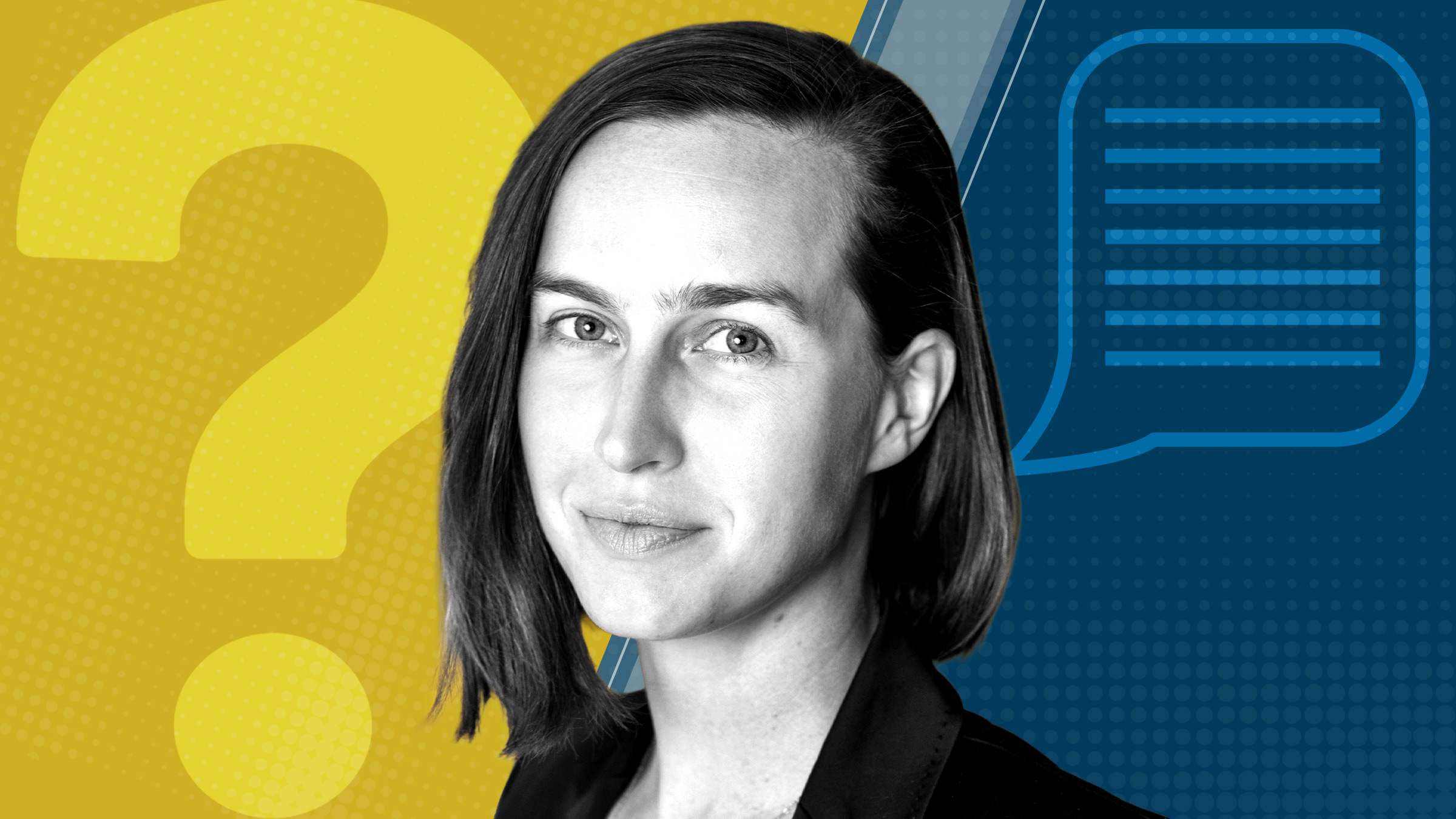
For this installment, we sat down with Alex Albright, an economist with the Opportunity & Inclusive Growth Institute at the Federal Reserve Bank of Minneapolis, to discuss riding in taxis, social networks, and birding.
What made you decide to study economics?
I didn’t know it at the time, but there were a lot of things that I was interested in as a kid that I now feel connect with concepts and methods in econ. I really liked math, and I really liked Nancy Drew. The idea of finding answers by using numbers always intrigued me.
I remember when I was really young, at some point I collected a dataset that I didn’t realize at the time is what we would call a dataset. I had a notebook that I would keep, and whenever I got to take a random taxi cab ride, I would keep track of the medallion number, the date, and all this other stuff because I wanted to know if I would ever ride in the same cab twice. It did happen and I was really excited about it! Two rows in my notebook with the same medallion number! Now when I look back on that, I feel lucky that I get to do some variation of this for a living—collect a dataset and look for an answer.
Fast-forwarding, I took econ in college because I knew it was important—the Great Recession happened when I was in high school—but I had a narrow view of what economics was. When I took economics electives and tried out part-time or summer research assistant jobs, I saw all different sorts of topics you could study with econ—education, family, history, even wine—and I saw how using data was key to a lot of the research. That realization got me going on the path towards a Ph.D. and working as a researcher.
What are you studying right now and what do you want to study next?
I’m studying the imputation of race and its importance in understanding economic inequality. This is a joint project with Juliana Gamboa-Arbelaez, who is a grad student at the University of Minnesota. When we think about how different people experience the economy differently, one dimension of that in the U.S. is race. But many datasets that are used to study economic differences by race are missing data on racial identification.
What do researchers do when data on race is missing? They impute race, which means they predict a person’s race based on other data, like where they live or their name.
Race imputation methods are becoming more common, and they are used in all sorts of economics papers, like ones studying taxes, health care, credit, housing, and crime, for example. But there are many ways to impute race, and it’s not well understood how they all compare. So, our project brings these different methods together and then compares their performance in a number of dimensions. The goal is to highlight the importance of these methods that are operating in the background of a lot of papers and make some broader points about imputation and measurement.
What do you think is the most useful idea in economics?
The concept that comes up the most in my mind is the margin. I think about how, at any given moment, we all are making choices, and our choices relate to the concepts of marginal cost and marginal utility, even if people don’t use those exact terms. For instance, if I’m getting to work and I’m doing that first email, it has high marginal cost, but when I’m doing the 10th email, it has lower marginal cost because I’m in the zone, and I can feel that. Whenever I feel like, “What’s another one?”—be it email to write, paragraph to edit, graph to draft—I know, “Oh, this is low marginal cost right now.”
What’s an important economic statistic you think people should know about?
This is a stat that I learned last year reading a paper that was new to me. Matthew Staiger, who is at Opportunity Insights, has a paper where he says—well, let me ask you: What percentage of people do you think have worked at a parent’s employer at least once by the age of 30?
I would guess 2 percent.
It’s 29 percent! Almost a third of people! I thought it was lower too, maybe 5 or 10 percent. But I’ve also talked to people who guess higher, like 70 percent. This is a good example of how aggregate statistics can tell you a lot about the economy that you might not naturally know from your own experience or anecdotes.
I also think this is a good stat to remember in terms of how important social connections are in the labor market. We know intuitively that parents are very important for how people navigate early labor market opportunities, but the 29 percent helps make that point more concrete.
Do you have any advice for college or high school students related to studying economics or to life generally?
One piece of advice I received that was helpful for me coming out of college and in my Ph.D. is, for small tasks, try to not touch the same piece of paper twice. There’s often a desire to write the perfect email or spend a lot of time on any given thing. Instead, make a good effort and then send that email.
Not everything needs to be a long-run project. Obviously, something like a research paper you should touch more than twice, because you’re going to be thinking about it over many years. But for the little things, embrace the discomfort of being like, I gave it a shot, and I sent it. That will also help you be able to do things like apply for a random program that might be interesting to you.
What is your favorite podcast?
I really like Pop Culture Happy Hour, Critics at Large, and Fresh Air. But the one that I’ll talk about a little bit more is Life Kit. I would describe it as little educational episodes about what I would call the hidden curriculum of living. Some of their early episodes were focused on things like credit cards and debt and tax prep.
It’s educational and it’s also very nonjudgmental because a lot of the topics they take on, especially the ones about money, are ones you might have never talked about before, but you feel like you are supposed to already know the answer. They have episodes about all sorts of things where you might just learn something very practical that you didn’t know. One recent episode was how to avoid getting mosquito bites.
If you had your own news station, what would you report on?
I’ve gotten very into birding in the last five years, so I think that my news station would probably be what I tell people about the local birds when I come back to work after the weekend. Something like, News flash 1: There are baby barred owls at Minnehaha Creek right now. News flash 2: There is an American kestrel nest right next to the Main Theater.
So, hyperlocal bird news.
If you could have lunch with any economist, who would it be?
I would have lunch with Janet Yellen. She was chair of the Federal Reserve and a former Treasury Secretary. We’ve lived in a bunch of the same cities at different points in our lives. She would be an incredibly interesting person to have lunch with and get her takes on the economy, the world, and life more broadly. So, if Janet Yellen ever reads this, I want it to be in print that, Janet, let me know if you ever want to snag lunch in Minneapolis.
This interview has been edited for length and clarity.