Author



Article Highlights
- Unemployment remained low but job growth also slowed
- AI affected how work was done at larger firms but has not eliminated jobs
- Labor force growth slowed in many areas, raising fears of labor shortage
The economy of the Federal Reserve’s Ninth District sent some mixed signals last year. In dollar terms, growth continued, but in employment terms, it slowed. That was among the themes discussed at the Minneapolis Fed’s annual Regional Economic Conditions Conference on January 9.
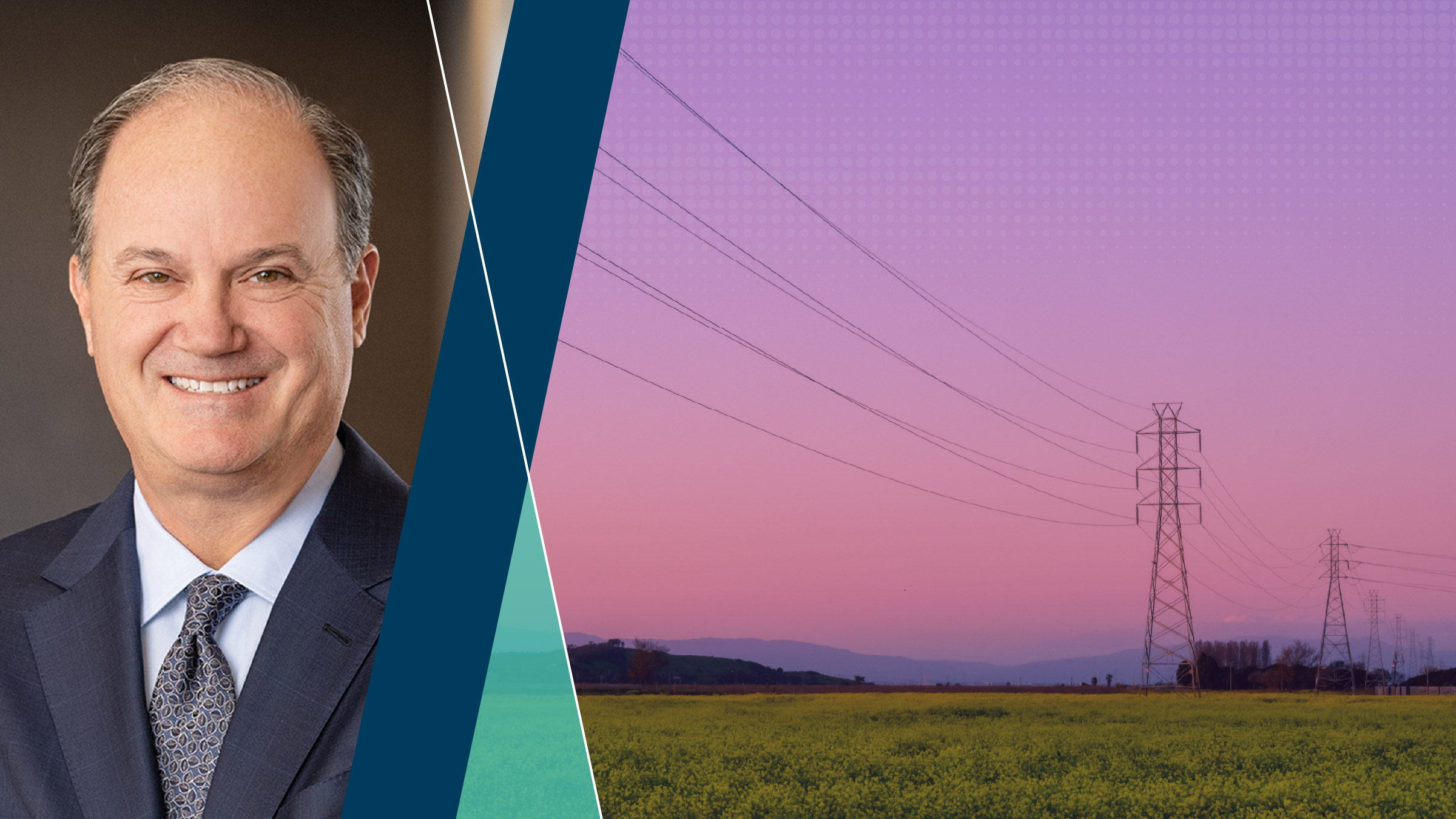
Keynote speaker, Xcel Energy Chairman, President, and CEO Bob Frenzel, observed an economy growing at two speeds. One part of the economy, driven by population growth in the utility’s Upper Midwest territory continued to enjoy steady, moderate growth. The part of the economy driven by data centers powering artificial intelligence has accelerated rapidly.
“We talk to all the hyperscalers. … We’re in daily conversations with all their development teams,” he said, and all of them are looking for new sites for data centers. He compared the current stage of AI development to the 1890s, when hydroelectric dams were first built at St. Anthony Falls in Minneapolis.
So far, though, Xcel has not expanded its labor force. Like many employers in the Ninth District and across the nation, the electric utility is in what Minneapolis Fed President Neel Kashkari called a “low-hiring, low-firing environment.” That sentiment was shared by other conference panelists from around the district.
Troubles on the farm
As of fall 2025, the Ninth District economy was growing, according to Bureau of Economic Analysis data. But it’s been a one-step-back, two-steps-forward dance with gross domestic product (GDP) among the six district states shrinking in the first quarter and then rebounding in the second and third quarters.
Some key sectors contributing to that pattern in the district include manufacturing, mining (including oil and gas extraction), and professional services. In South Dakota, North Dakota, and Montana, agriculture was also a key contributor, albeit not always in a positive way.
“As goes agriculture, so goes the state,” said Joseph Santos, director of the Ness School of Management and Economics at South Dakota State University, repeating a common saying in the state. Farms were already challenged by low commodity prices, inflated input costs, and high land rents. Things got tougher when U.S. tariff policies led to retaliation in countries that had been key export markets for farmers, he said.
David Flynn, a University of North Dakota economist, said the volatility of the policies was especially challenging. “It’s been very difficult to navigate with the on-again, off-again aspect of tariffs.”
“Our labor market is no longer tight”
Labor demand slowed or flattened throughout the Ninth District in 2025 compared with the prior year, according to panelists. In North Dakota, for example, the number of jobs grew by 0.4 percent in November, which is 1.2 percentage points lower than the same month a year ago. Minnesota was the exception with 1.3 percent job growth in November, which is 0.1 percentage points higher.
Demand varied across industries and geographies. Health care jobs grew in most district states. In South Dakota, finance and manufacturing jobs grew more slowly, while construction and professional and business services grew faster. Professional and business services shrank in Wisconsin but grew in Montana, buoyed by technology-related jobs embedded in that sector.
Montana’s technology sector is still relatively small but is growing rapidly, said Jeffrey Michael, director of the Bureau of Business and Economic Research at the University of Montana. “It’s really becoming an economic driver.”
The unemployment rate ticked up a bit throughout much of the district, but as of November, it remained lower than the national rate of 4.5 percent.
Minnesota’s unemployment rate of 4 percent was still within a healthy range, said Angelina Nguyễn, research director at the state Department of Employment and Economic Development. “It’s not a bad thing. However, our labor market is no longer tight.”
According to panelists, employers appear to be reluctant to let workers go despite decreasing labor demand. Some speculated that that was learned behavior from when tight labor markets made finding workers extremely difficult.
“We might summarize the labor market as being one where it is a good time to have a job but a challenging time to be looking for a job,” said Matthew Kures, a community economic development specialist at the University of Wisconsin–Madison.
Artificial workers?
Whether AI contributed to slowing labor demand was a question some panelists raised.
“We have not seen AI tangibly eliminate jobs in a noticeable way or creating new jobs in a noticeable way,” Nguyễn said. “The change is more nuanced—like how people work—and it’s not as drastic as losing jobs or gaining jobs.”
According to Kashkari, executives he’s spoken with at larger firms, including those who had been AI skeptics, now say they’ve found uses for the technology. For example, he said, one retailer uses AI to help customer service employees find answers faster.
Smaller businesses are a different story.
“They’re not entirely sure what to do with it yet or how it might impact their productivity levels,” Kures said.
Headwinds for electricity
One labor market that’s still very tight is construction, according to Xcel’s Frenzel.
A shortage of skilled workers in that sector has contributed to rising construction costs for the utility, he said. “When I look at what we’re paying for engineering and procurement, and construction … we’re seeing real pricing pressure, probably 30 to 40 percent over the last year or two.”
The cost of equipment has also increased—Frenzel said turbines and transformer prices have doubled—as has the lead time for ordering such equipment. A simple-cycle gas plant that used to take 18 months to build now takes four to five years, he said.
“We need to look forward more and plan more, and we need to build the infrastructure that’s needed further in advance,” he said. “That takes an enormous amount of thoughtfulness on our side.”
At the same time, higher costs will eventually make their way onto electricity bills, Frenzel said, though Xcel would try to limit increases by looking for savings in other places.
Future workers
Regardless of labor market conditions, panelists raised concerns about the size of the Ninth District’s future labor force as aging workers near retirement.
Debb Brunell, Upper Peninsula Michigan Works! CEO, said her region’s prime working-age population fell for nearly a decade while the retirement-age population grew. As a result, she said, the labor supply decreased even as demand increased, especially in health care.
Montana and northwest Wisconsin, which gained many new residents during the pandemic as remote workers headed for areas with natural amenities, are attracting fewer residents now.
In 2024, Montana’s population grew at its slowest pace in 22 years, and some newer data suggest more of the same in 2025, according to Michael at the University of Montana. For workers that’s not a bad thing, because labor shortages lead to higher wages.
“Looking forward to 2026, I don’t see anything right now that’s going to dislodge this pattern of really slow population, overall job growth, but with incomes continuing to move in a positive direction,” he said.
In North Dakota and South Dakota, where the share of residents in the labor force is already the highest in the Ninth District and where unemployment remains very low, panelists worried that any increase in labor demand would make hiring extremely difficult.
Flynn said North Dakota’s unemployment rate was just 2.6 percent. “We don’t have extra people just laying around without work.”
More On

Tu-Uyen Tran is the senior writer in the Minneapolis Fed’s Public Affairs department. He specializes in deeply reported, data-driven articles. Before joining the Bank in 2018, Tu-Uyen was an editor and reporter in Fargo, Grand Forks, and Seattle.