Author


Article Highlights
- AI use is shifting rapidly among businesses, and training programs are trying to keep up
- Workforce agencies are responding with grants, while higher education is retooling training curriculum
- Biggest need may be basic training for businesses still experimenting with AI
Like many organizations, Marcia Hultman’s is beginning to figure out how employees can take advantage of artificial intelligence technology.
But, as the head of South Dakota’s Department of Labor and Regulation, Hultman’s also charged with helping in-state businesses do the same with their employees.
Many of those businesses are figuring it out too, she said. When she asks businesses about AI use, very few have integrated the technology into their workflows. “There are a lot in the middle and a lot that haven’t even dipped their toes in the water.”
Throughout the Ninth Federal Reserve District, many other organizations involved in workforce training are also turning their focus to AI.
But they’re dealing with a fluid situation.
“We’re still figuring it out because, as the technology has been advancing so quickly, the need has been changing fairly quickly on us as well,” said Ross Jahnke, director of professional development programs at the University of Minnesota.
“One of the challenges out there that professionals experience, and we’re also experiencing at our end, is employers have a lot of different approaches to AI,” he said, meaning how much AI they want to use and how soon.
There is a sense of urgency because AI is widely expected to boost productivity and decrease labor requirements, which could result in job loss. No one wants to be left behind when that happens.
Nationwide, the share of major businesses using AI in their operations is far ahead of smaller businesses. There’s also a growing concern that workers without AI skills may become less competitive.
How much are businesses using AI?
The number of businesses currently using AI shows there’s potentially many workers to be trained. But much of the training needed is likely to be basic because most businesses that use AI don’t appear to be doing very much with it.
According to the U.S. Census Bureau, 22 percent of U.S. businesses used AI as of the end of July 2026. That’s a 4 percentage point increase since the beginning of the year.
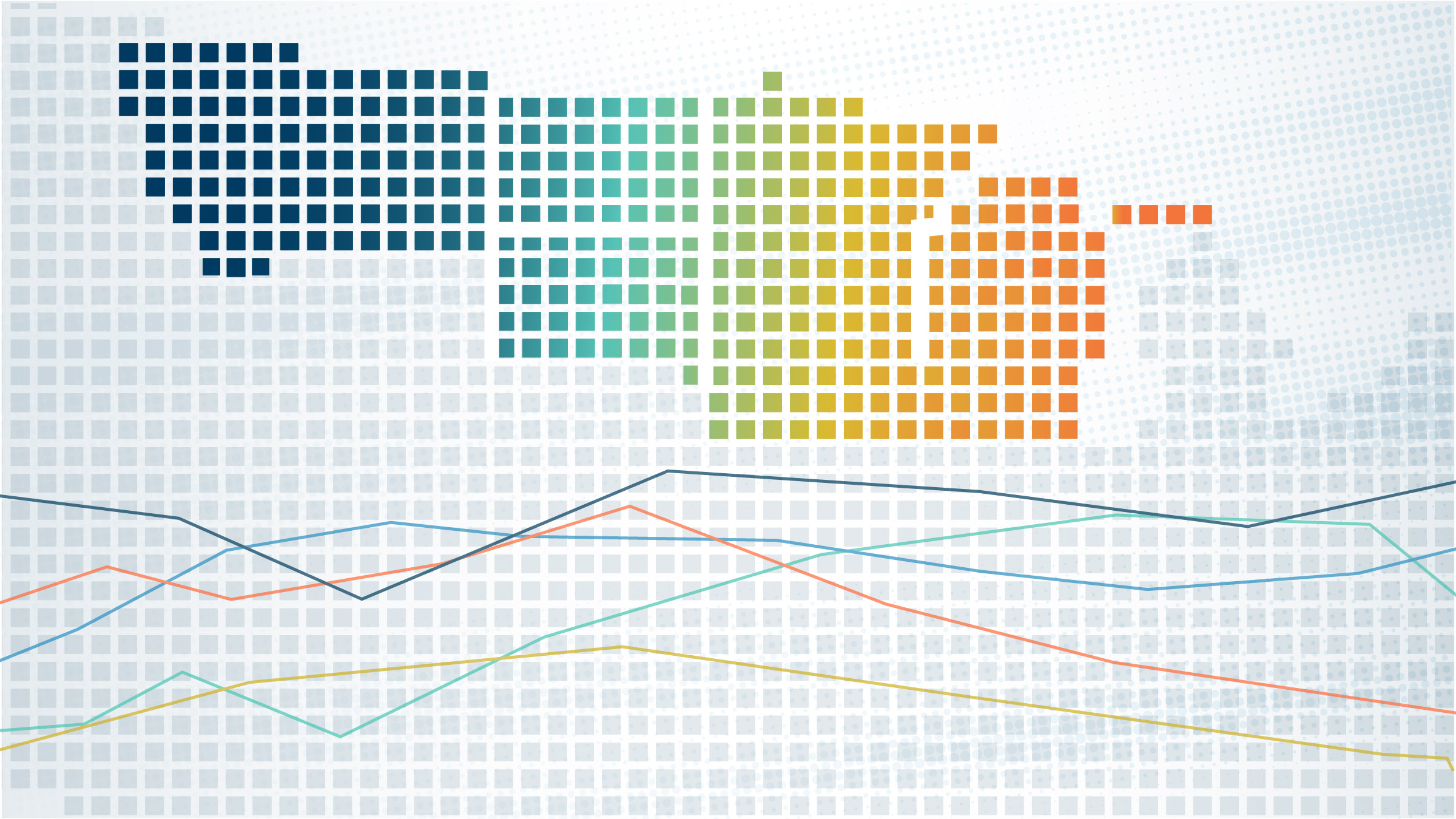
Around the Ninth District, the share of businesses currently using AI ranges from 14 percent in North Dakota to 22 percent in Montana (see figure).
But many indicators suggest that businesses are still experimenting with AI rather than integrating the technology into their workflows. Integration is where most experts believe businesses will achieve the most productivity gains, and where the need for labor may decrease.
For example, a February Census Bureau survey found that, among AI-using businesses, about half appeared not to use it for any specified task. Most of the remaining half of surveyed businesses said AI supplemented their employees.
Note that the term “AI” as used by the Census Bureau, as well as many businesses and labor experts, refers to several different forms of the technology. Among these, only generative and agentic AI, such as ChatGPT and Claude, are expected to disrupt jobs in the near future. Other AI, such as machine learning and voice recognition, have been in common use for a decade or more.
The February Census Bureau survey found only 2 percent of employers nationwide had cut jobs because of AI. None of the Ninth District experts interviewed said they had heard of AI-driven job losses among workers or businesses they dealt with.
Starting up training programs
Many Ninth District states already offer some basic AI training courses. Now, as they focus more on the technology, they’re providing training grants to businesses.
In South Dakota, the grants accommodate businesses at different stages of AI adoption, from “we don’t even know what we need” to “we have begun to implement AI into our workflows,” said Hultman.
Most of the 40 grant applications received by the end of July 2026 come from businesses seeking training in basic AI literacy, according to Hultman’s office.
In Montana, grants are funding AI training at rural hospitals and clinics, according to Sarah Swanson, commissioner for Montana’s Department of Labor and Industry. The health care workforce is stretched thin in rural areas and burnout risks are high. Leaning on AI for help finding relevant medical research or filling out paperwork can reduce that risk and let practitioners spend more time with patients.
Higher education is also becoming more involved across the Ninth District.
In many states, most of the training isn’t directly provided by workforce agencies but by organizations that specialize in education. In the Ninth District, many colleges and universities recently set up, or are in the process of setting up, AI institutes to offer training.
Among them is the Institute of Applied Artificial Intelligence, which Minnesota State University Moorhead (MSUM) started in fall 2025. The institute’s mission is to prepare both the regional and MSUM workforce for AI.
Having an organization focused on AI is helpful because the goal at MSUM isn’t to add a few stand-alone AI courses but to embed AI skills in all the courses, according to Jason Trainer, the vice president for strategic initiatives. The university envisions a future where the technology is commonly used in businesses from health care to manufacturing. And it’s preparing students for that future.
Demand for training
Business demand for AI training appears strong, though much of it appears to be from businesses that aren’t sure about how to use the technology.
“What we’ve seen so far is the [client] organization wants to equip their people to use AI, but they don’t necessarily have an enterprise-wide strategy yet,” said the University of Minnesota’s Jahnke. “So they’re wanting to equip their employees with the basic knowledge with particular emphasis on how to use it ethically and a basic understanding of how AI works.”
Earlier this year, the university’s professional development arm began offering an introductory AI course teaching students how to write prompts and avoid common AI hazards, such as data bias. More advanced courses will follow in the fall and winter.
Jahnke said the introductory course has enjoyed “moderately strong” enrollment, but it’s too early to predict enrollment for the other courses.
There may also be latent demand from businesses that might not have immediate plans to use AI but would participate in training opportunistically.
When Northern State University in Aberdeen, South Dakota, offered free introductory AI workshops in two nearby towns this past spring, attendance was more than double what organizers expected, according to Jennifer Deutsch, director of innovator empowerment. Attendees ranged from hospital workers to bankers to K-12 teachers.
“They were wondering how it can be used in their jobs so they don’t get in trouble [with harmful AI practices],” Deutsch said. The workshop gave them guidelines, but they also learned basic use cases, such as using AI to draft a brochure about diabetes or to brainstorm classroom activities.
Because AI is evolving rapidly with the technology becoming increasingly specialized for different purposes and different industries, it’s hard to offer advanced training that doesn’t rapidly become obsolete.
“Tools today like ChatGPT and Gemini and Claude aren’t necessarily what you’re even beginning to see out in the industry,” said Josh Riedy, director of MSUM’s AI institute. Training must include tools in use by businesses today as well as more general skills that help people adapt to future tools, he said.
Preparing for an uncertain future
Demand for training in AI skills is likely to grow with businesses’ growing use of the technology.
Over the next six months, the share of U.S. businesses using AI is expected to increase by 3 percentage points compared with July, based on Census Bureau surveys.
Among most Ninth District states, the expected increase is about 2 percentage points. Montana and North Dakota expected a decrease due to a growing number who expressed doubt that they would still be using AI.
Despite the technology’s limited impact on employment so far, there is a simmering fear in the public that massive job losses are not far off. Experts disagree on whether this is realistic, and where they land depends on how much artificial intelligence they think can replace human intelligence, and how soon.
Ayush Chopra, who developed a simulation of AI impact on the labor market while a grad student at MIT, said he doesn’t expect a “job catastrophe.” The simulation found that, among states, South Dakota had the highest concentration of jobs exposed to AI disruption, such as those in finance. By “exposure” he means that those jobs contain more tasks where AI can enhance human labor, not replace it.
If AI can improve productivity, that’s not a bad thing for South Dakota given the labor shortage, according to Hultman. The state’s unemployment rate in June was 2 percent, the lowest in the nation.
Hultman said it’s important for South Dakota to keep encouraging AI training. “This is the way of the future. We don’t want our state to be left behind.”

Tu-Uyen Tran is the senior writer in the Minneapolis Fed’s Public Affairs department. He specializes in deeply reported, data-driven articles. Before joining the Bank in 2018, Tu-Uyen was an editor and reporter in Fargo, Grand Forks, and Seattle.