Author



The research community at the Institute includes visiting scholars, consultants, economists, research analysts, and research assistants. These scholars bring varied backgrounds, interests, and expertise to research that deepens our understanding of economic opportunity and inclusion as well as policies that work to improve both.
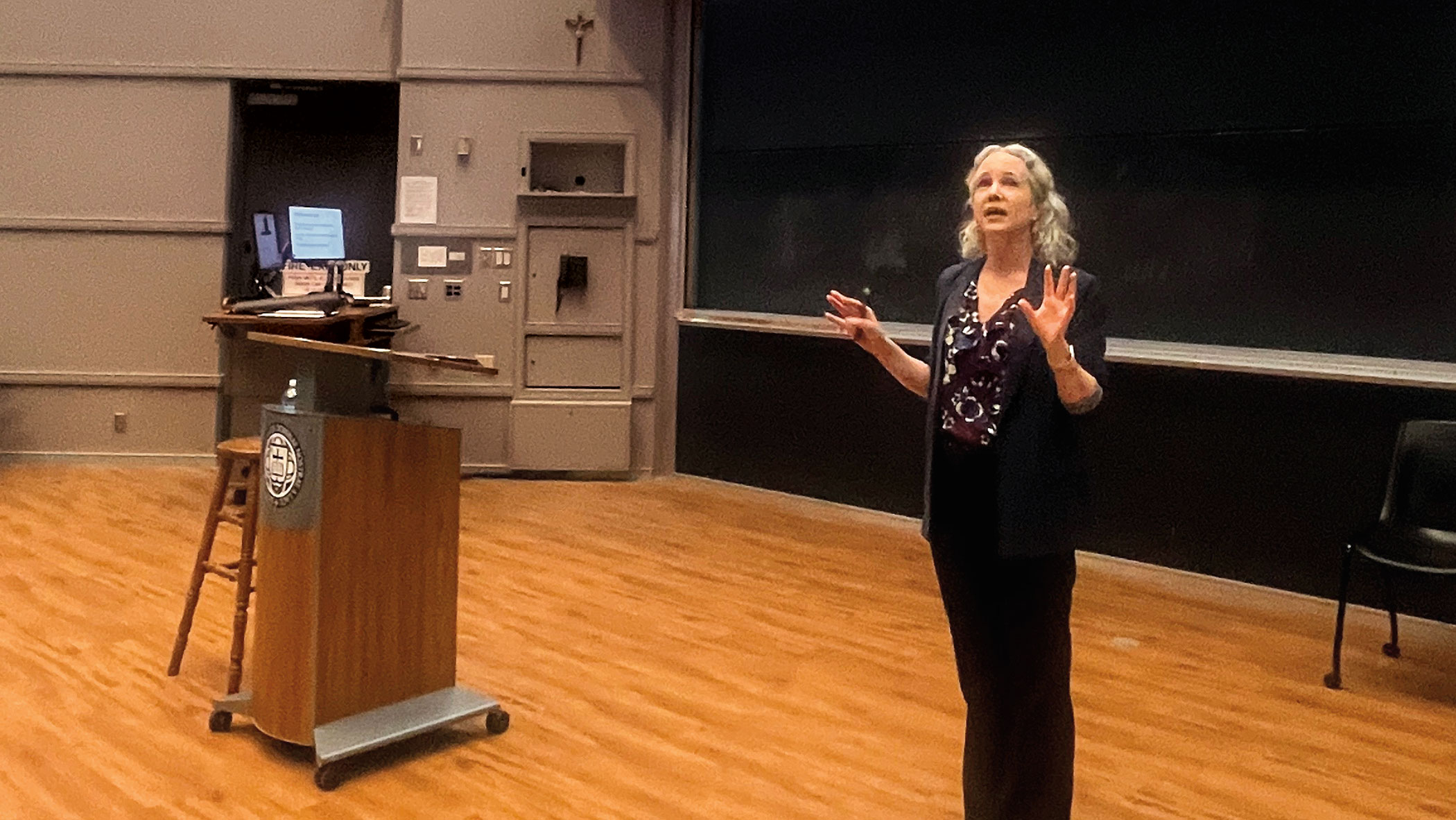
Like many who read sociologist Matthew Desmond’s 2016 book, Evicted, Andrew Glover was moved. As an economist, Glover was moved to construct a mathematical model.
Glover, the Institute’s System affiliate at the Kansas City Fed, wanted to understand the cycle of evictions that can afflict low-income renters like those profiled in the book. He partnered with Dean Corbae and Michael Nattinger of the University of Wisconsin–Madison on a paper now coming to fruition. Glover said the economists wanted a “theory of eviction” to help assess policies like the eviction moratoriums common during the pandemic.
Their model features a “two-sided lack of commitment”: The landlord is inclined to evict when a tenant hits a rough patch; the tenant is inclined to depart once back on their feet (leaving back-rent unpaid). The optimal result in their setting, the economists show, would be for both parties to ride it out. However, they find that eviction bans or waiting periods lead to excessive screening of tenants and a drop in housing supply. A better approach, they determine, would be a partial subsidy to the landlord. A public subsidy as low as 25 percent of missed rent “can overcome those commitment issues at a relatively affordable cost,” Glover said.
Glover discovered his passion for advanced mathematics later than many economists; math at his rural Indiana high school stopped at Algebra 2. An early college philosophy course instilled a commitment to convey complex ideas in plain language, a value he brings to his role as research coordinator for the Kansas City Fed’s annual Jackson Hole Economic Symposium. “We can’t lose parts of the audience” with the presentations, Glover said, when “the goal is to have a wide-ranging discussion amongst policymakers.”

The magazine of the opportunity & Inclusive Growth institute
In early 2026 Glover and colleague Johnson Oliyide debuted their own contribution to Fed policy: a new monthly estimate of the natural rate of interest (“r-star”). Other estimates are quarterly and based on projected rates of GDP growth. The Kansas City Fed measure instead uses the unemployment rate, which is more frequent and “what our dual mandate tells us we should be looking at,” Glover said.
Growth and employment often move together, but not always. Their new model could be an important, alternate signal for policymakers in the age of artificial intelligence. “If we start to see divergence between underlying growth and labor markets,” Glover said, different r-star models could suggest “a divergence in what the appropriate policy rate should be.”
This article is featured in the Fall 2026 issue of For All, the magazine of the Opportunity & Inclusive Growth Institute
More scholar spotlights from this issue
Moises Yi—Similar people, dissimilar outcomes
Richard Liu—Finding his path, leaving his mark

Jeff Horwich is the senior economics writer for the Minneapolis Fed. He has been an economic journalist with public radio, commissioned examiner for the Consumer Financial Protection Bureau, and director of policy and communications for the Minneapolis Public Housing Authority. He received his master’s degree in applied economics from the University of Minnesota.