Author


Article Highlights
- Cultivation of hemp in district had fallen before change in federal law that throws status of new market into question
- Production for cannabinoids is high maintenance and costly
- Strong supply put downward pressure on product prices
Last year, tucked away in a sweeping congressional bill to fund the federal government and end a record-long shutdown was a little provision relating to hemp. All it did was clarify the definition of the word, but it threw a burgeoning industry into disarray. But this might not have been as disruptive to regional farmers, who had already moved away from the crop.
The change in the law was necessary, advocates argued, because a loophole in a 2018 federal farm bill unintentionally opened the legal door for all manner of intoxicating products—beverages, snacks, and other consumables—that could be made from hemp. These products quickly became available at retailers whether their state had legalized recreational marijuana or not.
There has been a fair amount of attention on the impact that the new change in law will have on retail cannabis businesses if and when it goes into effect as scheduled on November 12, 2026. But key to the “hemp loophole,” as it is called, is that the THC in gummies, seltzers, and other products is sourced from industrial hemp grown on farms. And it turns out production of hemp in the Ninth Federal Reserve District and across the country had already fallen significantly before any change in policy.
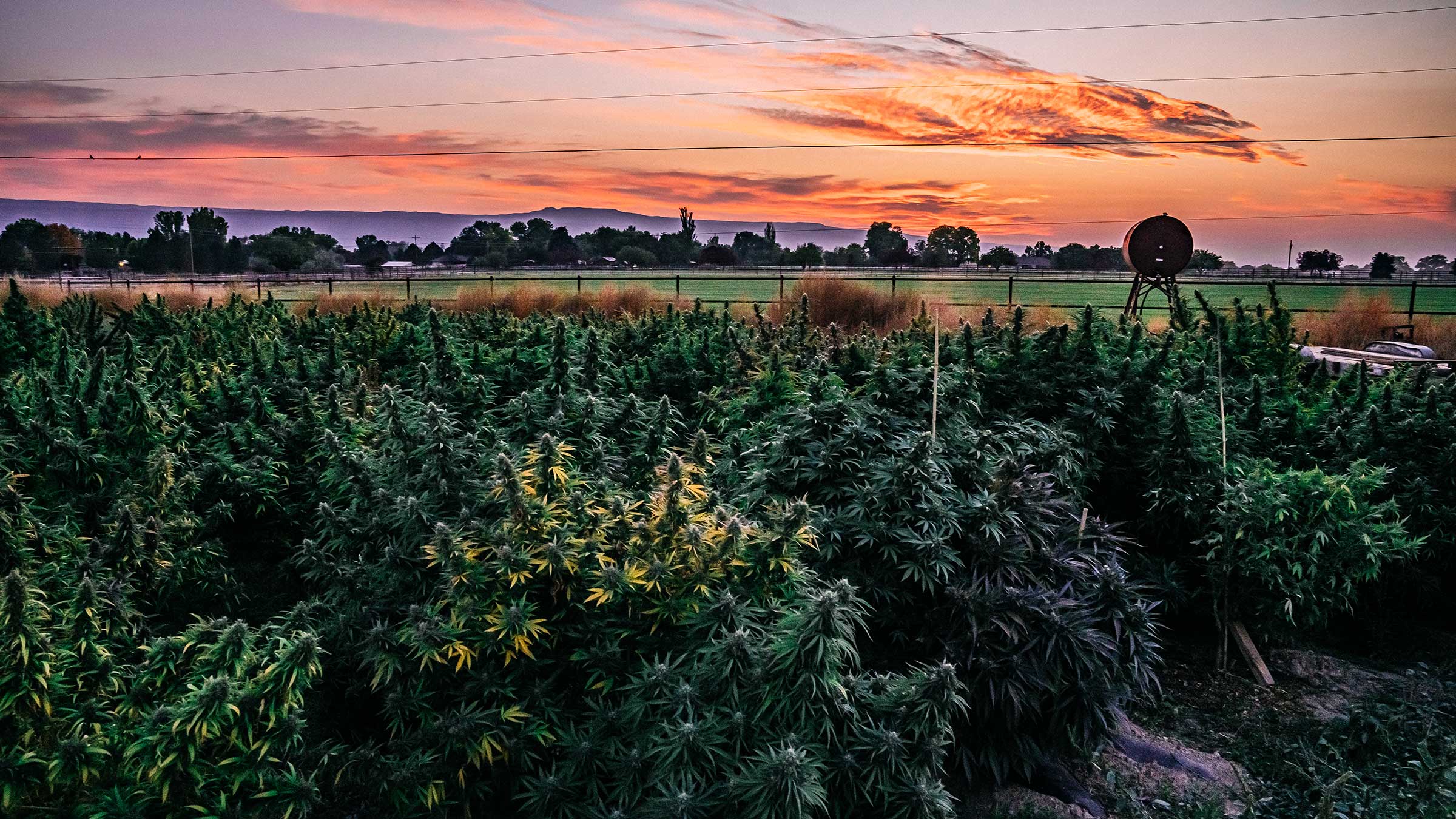
It helps to sort out the industry a bit. Hemp is the same plant species as marijuana (or cannabis), but their breeding and growing practices differ. Industrial hemp has traditionally been cultivated for fiber, seed grain, and oil, while cannabis is grown for flowers that contain psychoactive THC. However, thanks to the hemp loophole, newer varieties of hemp are now grown for flowers that are not only rich in nonintoxicating cannabinoids like CBD but also have THC levels low enough not to run afoul of the law yet high enough to be extracted.
It was these CBD products that first got the attention of farmers. But the supply of hemp flower quickly led to a proliferation of hemp-based THC products. These products were legal if they contained less than 0.3 percent THC by weight but could easily supply enough milligrams of THC to get consumers high.
All the attention the hemp market is getting might make you think this is a booming crop market. In fact, the Department of Agriculture’s most recent statistics show that total acreage of hemp harvested increased 34 percent nationwide in 2025 from the prior year, while the value of production increased 64 percent. But over a longer term, that uptick is only a small rebound from a big surge of early enthusiasm that fell off quickly.
In fact, planted acreage of hemp in the Ninth District actually decreased last year to the lowest level on record (see figure). Detailed hemp production statistics, including floral versus fiber use, aren’t available for all states in the district, but the USDA’s farm service agency tracks acres planted. Acreage planted both nationally and in the district peaked in 2019, the first year it was tracked. And despite some variation among states—acreage in Minnesota trended up the last three years, for example, while South Dakota’s didn’t peak until 2023—district acreage by 2025 had fallen by roughly 85 percent since 2019.
This decline took place even as the market for hemp-derived THC gummies, seltzers, and other cannabis products was taking off. For one thing, though the market has grown, it doesn’t translate to a huge amount of acreage. Hemp Growers of America, an industry trade group, suggests that “30,000 acres of hemp will meet US market demand.” Even while well below peak levels, U.S. production last year totaled more than 43,000 acres. Downward pressure on prices is evident in industry data, indicating that CBD prices in April were down 15 percent year over year.
It also turns out that after the initial wave of novelty and interest, growing hemp for extracts was less profitable than initially thought. While industrial hemp for fiber and seed is relatively low maintenance and grows well in the district’s climate, hemp flower requires a lot more hand-holding. For one, only female plants produce significant cannabinoids, and those degrade after pollination, so care needs to be taken to sort out male plants. Flowers blooming late into the season are also ripe territory for mold and pathogens, so the plants do better if they’re grown under protection.
All of this extra care costs more money, which could be justified by the higher-value extracts from the crop. But as with other commodities, markets are hard to predict. All of this led the Hemp Growers of America to advise, “High production cost severely limits profitability as the price for CBD has plummeted since 2019.”
It remains to be seen whether the change currently encoded in federal law will take effect. There is significant opposition from the industry, and some proposals for the next long-awaited farm bill would amend the definition and treatment of hemp again. Either way, Ninth District farmers have already largely soured on the crop.

Joe Mahon is a Minneapolis Fed regional outreach director. Joe’s primary responsibilities involve tracking several sectors of the Ninth District economy, including agriculture, manufacturing, energy, and mining.