Author


Article Highlights
- Seminal findings unlocked complex mechanics of how consumers demand and producers supply dizzying array of products
- Research improved precision of inflation measurement; Pakes worries aggregate inflation now misapplied for social programs
- Understanding aggregate economy requires understanding how individual industries work, a task greatly accelerated by AI
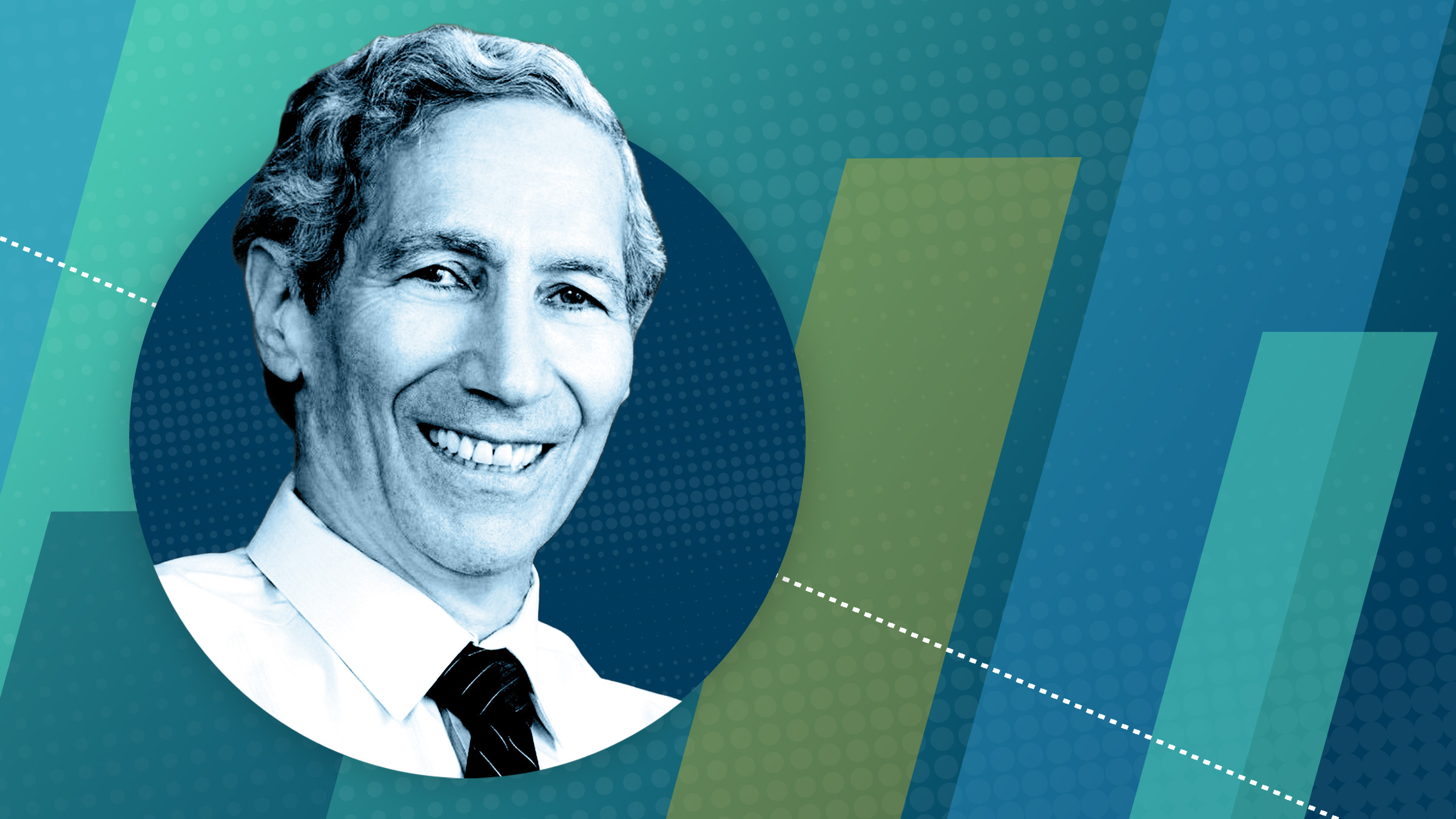
Ariel Pakes is truly an economist’s economist. The Thomas Professor of Economics at Harvard has co-authored foundational papers that redefined how subsequent researchers model both supply and demand sides of product markets. Graduate students learn his methods; his many honors include the Econometric Society’s Frisch Medal in 1988, for modeling the returns to holders of patents. By following his curiosity across a 50-year career, Pakes helped establish the specialty of empirical industrial organization (IO), in his words: “How firms interact in a marketplace, and how that determines price and investment incentives and the evolution of the market.”
Alongside his theoretical contributions, Pakes’ ideas have a special knack for cropping up in practical settings—from boardrooms to courtrooms to the backrooms of the U.S. Bureau of Labor Statistics (BLS). In his research, economic theory is never far from a real-world application. “Every time I did something, I applied it just to make sure it worked,” Pakes said. “The methodology went with content.” By credibly deconstructing examples like the automobile market, telecommunications deregulation, and how consumers choose a health plan, Pakes and co-authors have built durable supply and demand frameworks with broad potential.
Applying a promising theory to an actual market can take time. In recent work on pharmaceutical advertising, Pakes at last applies methods he developed while working on his Ph.D. thesis in the late 1970s. “I don’t like doing anything unless I’m pretty sure I’ve got the answer right empirically,” Pakes said. “And now I finally think I have done it.”
Pakes’ longevity and patience are also paying off in his later career, as artificial intelligence empowers empirical IO to tackle the seemingly infinite complexity of our real economy. In a recent conversation, we covered his contributions to measuring inflation, nuanced antitrust enforcement, and why incessant ads for prescription drugs might be a good thing.
This interview was edited for length and clarity.
Your work has been taken up by government statisticians, antitrust regulators, consultants from the auto industry. How have you been able to do such work of academic rigor, with heavy theory involved, and yet people in the real world want to use it?
I think I’ve been helped a lot. When I was a student at Harvard doing my doctoral degree, [former Fed Chair and Treasury Secretary] Janet Yellen was teaching at the time. She was not that different in age from us and so we talked to her a fair amount. I remember her asking me, what do I want to do? I said, “I want to mix empirical work with theory. I think that’s the way to get ahead.” And Janet said, “That’s the hardest thing to do.”
I think at the time she was right. But over time computers and the availability of data have made it much easier. My first “hit” paper was “Patents as Options“ [published in 1986] and to actually compute the thing, I had to take down the science center computing at the Hebrew University [of Jerusalem] for a week. Today, I could do that on my laptop in about 10 minutes. It’s a huge difference, and it’s the same magnitude of difference in data availability. So, I was helped a lot by that. I think the other thing that helped was my interest in issues related to social questions.
Twenty-five years ago, you set out to improve how the consumer price index measures inflation. What did you feel that the statisticians were getting wrong?
There was just a methodological error in the way they did it. And it wasn’t the BLS’s fault—it was just the way measurement evolved.
The CPI is supposed to calculate what the price would be today for the same bundle of goods bought in some base period. What they did at the time, and are still doing to a large extent, to gather the needed data is to send these data-gatherers to particular outlets. On the first visit they would find a television or a radio or whatever and write down all the characteristics of the identified product. They would then come back in two months—or one month in New York, L.A., and Chicago—find the same product, write down the price at that time. Then they calculate the ratio to the prior price—a “price relative.” They would do this for a number of televisions and take the average of the price relatives as the price increase for the component of the index. Then you would use a consumer expenditure survey as weights for how much people spent on each of these component indices and use the weighted average as the CPI for retail goods. For housing, it was slightly different, but for most of the rest it was similar to that.
The problem is that when they go back to the store, some of the original goods wouldn’t be on the shelves anymore. Those goods were disproportionately goods that were obsoleted. If you look at computers, the goods that weren’t on the shelves anymore were the goods that were not competing with the new computers, which had higher RAM, better visibility. Presumably the goods that dropped out were goods whose prices were falling. So, when you average you get a biased index. It’s biased positively because you dropped out the goods whose prices were falling. I just provided a way of partially fixing that, with something called “hedonics.”
Hedonics is described as a value adjustment, a quality adjustment—you’re keeping track of the characteristics and the change of the characteristics of the products, not literally the product itself. Is that a reasonable summary?
Yes, it is a quality adjustment. You have to be careful because for the lower-quality goods that are dropping out, you don’t really have the characteristics of all of them. You have to be able to condition on unobserved characteristics, so that was a little bit tricky. You do that through looking at the residuals from the hedonic regression. The ones that dropped out have more negative residuals than the ones that stayed in.
Hedonics are now used in many categories in the consumer price index and, by extension, the personal consumption expenditures price index, which leverages a lot of that same work. But not everywhere. Is there still work to be done in terms of improving the price indexes along these lines?
I don’t really know. It requires extensive differences in how the BLS does this. And the thing that makes it hard is that every time you change the consumer price index, there are various institutions that have an incentive to get involved.
Let me just say, I think the problem with the CPI is it’s used in too many places. Let me give you an example. It is an aggregate index, so it’s weighted by expenditure shares from a random sample of the population. How many people from a random sample bought a television this year as a function of total buying? That’s the weight of televisions.
Those weights are not the weights of some of the people we care about. For example, the CPI is, in my view, wrongly used to index the poverty level and entitlement programs. The reason is the people who get [assistance] based on the poverty level or the entitlement programs are primarily not buying the typical basket of goods. As a result of that, what they’re given is not keeping up with what society thinks they should be given.
We have laws that say if you are a member of society who abides by our rules, you are entitled to a minimal level or basket of goods. And this goes back philosophically to what’s called “contractarian” philosophy. There is SNAP for the food program. There are housing vouchers for housing. There’s Medicare and Medicaid for health.
If we’re committed to giving everybody a minimal basket of goods, it’s the cost of that basket that we should be indexing the poverty and entitlement programs to, not the CPI. And they’re very different for different age and income groups. With age, the biggest difference between the CPI and an index like [the forthcoming research] Rebecca Diamond and I are doing, based on the entitlement programs, is health. [The expenditure share of] health would be about 40 percent. In the CPI it is like 10 percent. It’s a huge difference. Housing would go the other way, though it would still be high.
An index based on these government [social] programs should also change the basket being evaluated every year as the government programs change. If you look 25 years ago, what Medicaid and Medicare guaranteed for cancer treatment was nothing like what it is today. Our society has decided that we have an ability to provide a certain level of Medicare we didn’t have before, and the Centers for Medicare & Medicaid decided that we’re going to give at least that much to everybody. The consumer price index does none of that. It updates the basket only in very long intervals. The government changes the rules for entitlements every year. [They added] Medicare Part D, for example.
I think this is causing a schism in society. We’re not giving people below the poverty level, or below 150 percent of the poverty level, anything like a standard of living that as a government we have legislated as minimal.
Your work introduced huge advancements in how economists model consumer demand, most famously in your 1995 paper on the automobile market with Steven Berry and James Levinsohn. You all found a way to capture the real environment that we all live in, where we have what feels like a zillion choices for any given product. Is this related to your CPI work?
Yes, that’s where I started. I was doing consumer demand when I started to think about that, and I had a thesis advisor, Zvi Griliches, who was one of the original people who did hedonics. That put me on to hedonics, and I did the demand stuff with some colleagues prior to that. The original paper I wrote on the CPI clarifies the relationship between them.
As an IO economist, I have to analyze a market. In the auto market, there were 200 models. If I was to do a demand system—let’s say, how many people want to buy an Oldsmobile Ciera—you’d need the prices of all the goods. Just for the demand for the Olds Ciera, you’d need 200 price coefficients at least, even if you just did it linearly.
That’s what we call, in IO, “product space.” The only thing you know is the products and their prices. And that’s how demand systems used to be analyzed. If you did that, I’d have Olds Ciera quantity on one side, 200 prices on the other, and a similar equation for every one of these 200 products. That’s 40,000 coefficients. There’s no data that could effectively estimate 40,000 coefficients.
What we did in the demand systems—the BLP [Berry, Levinsohn, Pakes] group—is we said, If we know the characteristics of the products, and the distribution of preferences over those characteristics—like you have a preference for car size that depends on your family size and price that depends on your income—then all I really need is the distribution of people’s preferences, some of which I can get from age and things like that. If that distribution is, say, normal, and there are 10 characteristics, there’s something like 50 covariance terms. And from that, I can give you 40,000 cross-price elasticities. I just determine what everybody would do if a price changed. I need to sum over households. But with modern computers, that’s easy even for a hundred million people. And then I say, What would happen if I changed the price? I see what you would buy if the prices changed, or what everybody else would buy, and I find out the price elasticity.
Working in “characteristic space” like this has two advantages. One, it allows you to estimate demand in a market with many products. Two, it allows you to do the second question in IO, which is, What products do I want to develop? If all I have is past price and quantity, I can’t tell you what would happen if I put out a new product. But if I know the characteristics of a new product, then I get some idea of what the demand for a new product would be. That’s the incentive for the development of new products.
I gather you had some people come knocking from Detroit and they wanted to know how to actually use this. Were they able to put it into practice?
I will tell the one story I know for sure, which is when General Motors was really a huge company. There was a guy named Mustafa Mohatarem in charge of research who had a Ph.D. in economics and was a very smart guy. He asked us to come to General Motors headquarters and present on the basic stuff. It didn’t have any micro data, just aggregate characteristics and quantities demanded. Afterwards he said to us, “I know exactly the markups on every product, up to the options that are on the product. You guys got it almost right. What would happen if I gave you real data?”
So, he gave us their micro data. They had, at the time, an annual 64,000-person sample from new purchases, new registrations across the U.S. And then they had another 64,000, asking the people what they liked and what they didn’t like and what their second choice was. So, we got an old copy of that.
Why I brought up the Olds was because one of the questions he asked us is, What would happen if we killed the Olds department of GM? This is because they had Pontiac, they had Chevy, they had many midsized cars or family cars, and they thought they were just cannibalizing each other. They were not expanding. They killed Olds before we got back to them because it took us a while to figure out how to use the micro data. But after we did this, we got a phone call from them asking for the programs. We put the programs together in a way they could use them, sent them to GM, and they never talked to us again about this. They just wanted the programs. I hope they ended up using them.
Let me say, the place where this is being used now a lot, and will be used increasingly, is in merger analysis by the antitrust divisions.
Let’s get into that side—your research on deregulation, market power, and consumer welfare. Tell me about how that work has been taken up.
There’s one place where it really has been effective, and will be increasingly so, at the level of the Federal Trade Commission and the Department of Justice. They have economists who have input into the decisions on whether they’re going to go forward or not [to allow or block a merger, to bring forth a monopolization or collusion case]. These economists went to graduate school, and by now in graduate school, people are teaching our techniques. The Hart-Scott-Rodino [Antitrust Improvements Act] says that if the merger is between two firms of certain sizes, it has to be approved by either the DOJ or the FTC. When they get these requests they can actually build a demand system for the market.
How does the price get set in standard economics? Say I increase my price by a dollar. From all those people who stick around, I earn an extra dollar. But for those people who leave, I lose the markup between the price and the marginal cost. I keep increasing the dollar until those two forces just balance each other.
After a merger, the same thing happens. I keep increasing my price by a dollar, and then I get the dollar from the people who stay. But some of the people who leave will go to my other product. I gain something from the other product. So, I don’t stop pricing when the net loss on the first product is zero, I just keep going to a higher price.
The merged company has more diverse product offerings.
Yes. So, you have to understand if I increase the price of the product, not only how much people decrease the quantity of the product, but where they go. Because if they go to the other product that I’m merging with, it’s a problem for the DOJ or the FTC. To analyze that, they need a demand system. They need to know how people substitute. And that’s where BLP came in.
This is going to be much easier to do now that Claude [the AI model from Anthropic] can analyze BLP in seconds. As long as you give it the data, it will give you the answer. You ask it to perturb it and do it a different way, it’ll perturb it and do a different way. So not only have they been using it, but now they can do it in finite time, making it much more useful.
Is that an exciting development, for you to see AI putting your work on steroids?
Yes, it’s fun. I mean, it’s what we tried to do in the first place. We tried to analyze policy issues realistically—that is, with empirical work based on a realistic model of the industry with realistic demand patterns. So yes, it is exciting.
When analyzing the effects for consumers of a merger, where does innovation come into it? How do you try to estimate that piece of it?
That’s the hardest part. That’s what I call the “dynamics.” I wrote this paper on this when I was a student, with Rick Ericson who was a first-year assistant professor. And I think we’re just now starting to get our heads around it in a way that’s useful. Up to now, the way dynamics has been handled in the antitrust world has been largely through laundry lists at the end of every report that say, “Well, X could happen or Y could happen or Z could happen.” And sometimes a judge will change results based on this list.
With the basic stuff you can do now with Claude, it’ll be much easier. Price changes induce product change. They induce development incentives for products, and other technological changes also induce development changes for products. And those require a whole dynamic argument.
Relatedly, I was looking the other day at what the judge said on the Microsoft case.
This is the Microsoft antitrust case from 20 years ago?
Yes. The judge’s answer goes something like, there may be some problems with monopolization and each side has given us some arguments. But he essentially said the one thing you don’t want to do is stop innovation in the economy. And Microsoft innovated. Without innovation, the economy stagnates.
By the way, I think this is one of the biggest problems of antitrust analysis in the United States, and it is particularly prevalent in pharmaceuticals, which is the market or the industry that I think generates probably the most social surplus of any industry in the United States. The problem is that nobody takes a step back and analyzes the market as a whole. On pharmaceuticals, you hear all these statements that pharma companies are making excess markups, markups on the order of 75 percent, or something like that, and we should do something about it. I don’t know whether we should do something about it, but those 75 percent are generating the research incentives that have changed health care in a really substantive way.
One example that I just saw the other day was metastatic melanoma, skin cancer. In 2010, the five-year survival rate was 5 to 10 percent. By 2020, it was 30 to 50 percent, and by now I’m sure it’s higher than that. That’s a huge change in society’s welfare. Maybe we want to change the structure of that market, but we don’t want to change it in a way that lessens R & D incentives.
There’s no committee, there’s no institute of the [U.S.] government that takes a step back and evaluates the industry as a whole, including its dynamic incentives. That’s not true in every country. In Britain, we can say it does it well or it does it poorly, but the Competition and Markets Authority has studies of industries that are designed to do that.
Let’s talk more about the pharmaceutical industry, where you’ve been studying direct-to-consumer advertising. This is something that, as I understand it, is particular to the United States. What about that market fascinated you, and what are you trying to learn?
Well, one, I had data. The other thing is, it’s a real policy issue. The United States only allowed direct-to-consumer pharmaceutical advertising on TV in 1997, and the only other developed country that allows it is New Zealand. TV is more than three-quarters of it by now. What would happen if none of the firms can do direct-to-consumer advertising?
Direct-to-consumer advertising goes to you, the consumer, but the biggest amount of advertising spend is on “detailing,” which goes to the doctor. The reason they’re doing direct-to-consumer advertising is they’re telling you to ask your doctor for this particular drug. You have heartburn or something else, and the TV says, “Go to the doctor and ask for this particular medicine.” The companies realize that if they’re going to do direct-to-consumer advertising, they had better tell the doctor that this is a good drug and all the characteristics of the drug.
So detailing, which is only going to doctors, increases substantially with direct-to-consumer advertising. And a large part of it will go away if direct-to-consumer advertising goes away. You really need an equilibrium analysis. This puts us straight in the nexus of what IO does, the interaction between firms and the interaction between the products of firms.
You find that if we were to eliminate direct-to-consumer advertising of drugs, firms would not invest in the detailing to keep doctors informed, which is not good.
Yes. They would decrease their investment dramatically. And the other thing that would happen, of course, is profits would go down, and the profits affect R & D incentives.
So, we should be glad that every ad on every streaming service right now seems to be an ad for a drug?
Well, let me say, that’s in our current environment. It doesn’t mean that I couldn’t think of a counterfactual environment which would improve on this.
For example, if the FDA [U.S. Food and Drug Administration] decided to do the advertising, they’d say something like, “You have heartburn. If you don’t go and get the purple pill, you have a 50 percent chance of getting ulcers. Ulcers are a very serious disease. You’re going to be in the hospital. You’re never going to be the same. Go to your doctor and ask for something against heartburn, and this will go away, and you’ll never have to worry about it again.”
The FDA could do that by themselves saying, “We’re not going to give you the name of a drug. We’re going to tell you there’s a drug that heals this, and if you don’t heal it, you will get very sick.”
This would be some sort of public service announcement campaign on TV?
Yes. TV is a very good medium for this, because a lot of the people who are not taking the drugs they should be taking are poor people who don’t go see doctors. But they do watch TV. Whereas somebody like me who sees my doctor every two months for a checkup, they know what my problems are. For the people that need the TV ads, especially younger people, they don’t see doctors. And unless they’re told that they can fix something that they have, they don’t know that they can fix it.
There are pockets of industrial organization (IO) expertise within the Fed System. The Chicago Fed comes to mind, where they’ve got the Michigan automotive industry in their district. But in general, it is not a major in-house focus compared to areas like macroeconomics, labor, finance. What do IO insights have to teach the world of monetary policy?
Not all industries react in the same way to everything. All the stuff on markups and productivity that’s in the literature—most of the stuff that comes to the Federal Reserve—is aggregate. And you learn very little from the aggregate statistics because it’s an aggregation of people or firms, some of whom did better as a result of a policy and some did worse.
I’m an IO economist. I work market by market. The pharmaceutical industry is a good example of why we should be studying each industry separately. If you wanted to know what happened to productivity in the pharmaceutical industry, that would include health outcomes. I can’t do it without studying how research gets transformed into drugs. And I need a separate group of people to study that. This is one of the major industries across the world, but most of the big firms are American firms. I would argue for that to be part of the Federal Reserve Board, because the DOJ or the FTC is not doing it. Somebody ought to be looking at the industry as a whole and the structure of it.
One theme I hear across the topics today, whether you’re talking about inflation or how we approach antitrust or productivity, is that there is risk in trusting aggregate level data, in looking at the averages. What is happening at an industry level or among different types of consumers—that view of the world is much more complex, but that’s what tells us what’s really going on.
Yes. I’ll add one thing, which is it’s getting easier to do at a micro level because the data is better and computers are better.
What an enormous change over the course of your career.
Yes. It’s been what generated my gains—that, and a little bit of econometrics and theory.
Last question: You were a philosophy major as an undergraduate. What have you continued to carry forward and make use of to this day?
I think it’s the philosophy of science, that you have to put together data and theory to understand the world. Data by itself cannot prove anything. You need the theory that generated the data to have an answer. The theory is not perfect either, but you’ve got to start somewhere. The issue isn’t that we get the answers right. The issue is that we get the answers better than the next best person could get them. The world is too complicated to get them exactly.

Jeff Horwich is the senior economics writer for the Minneapolis Fed. He has been an economic journalist with public radio, commissioned examiner for the Consumer Financial Protection Bureau, and director of policy and communications for the Minneapolis Public Housing Authority. He received his master’s degree in applied economics from the University of Minnesota.