Authors

Lejla Mehmedovic
Intern, Community Development and Engagement

Article Highlights
- Wage subsidies, public-hiring programs target workers facing economic barriers
- Policymakers balance potential worker outcomes with employer trade-offs
- Changing labor market raises new policy-design questions
Labor markets raise an enduring question for policymakers: How do we help people find and keep jobs? At times of high unemployment or weak hiring, policymakers may feel additional urgency to create ways to help individuals find work, particularly those who face employment barriers.
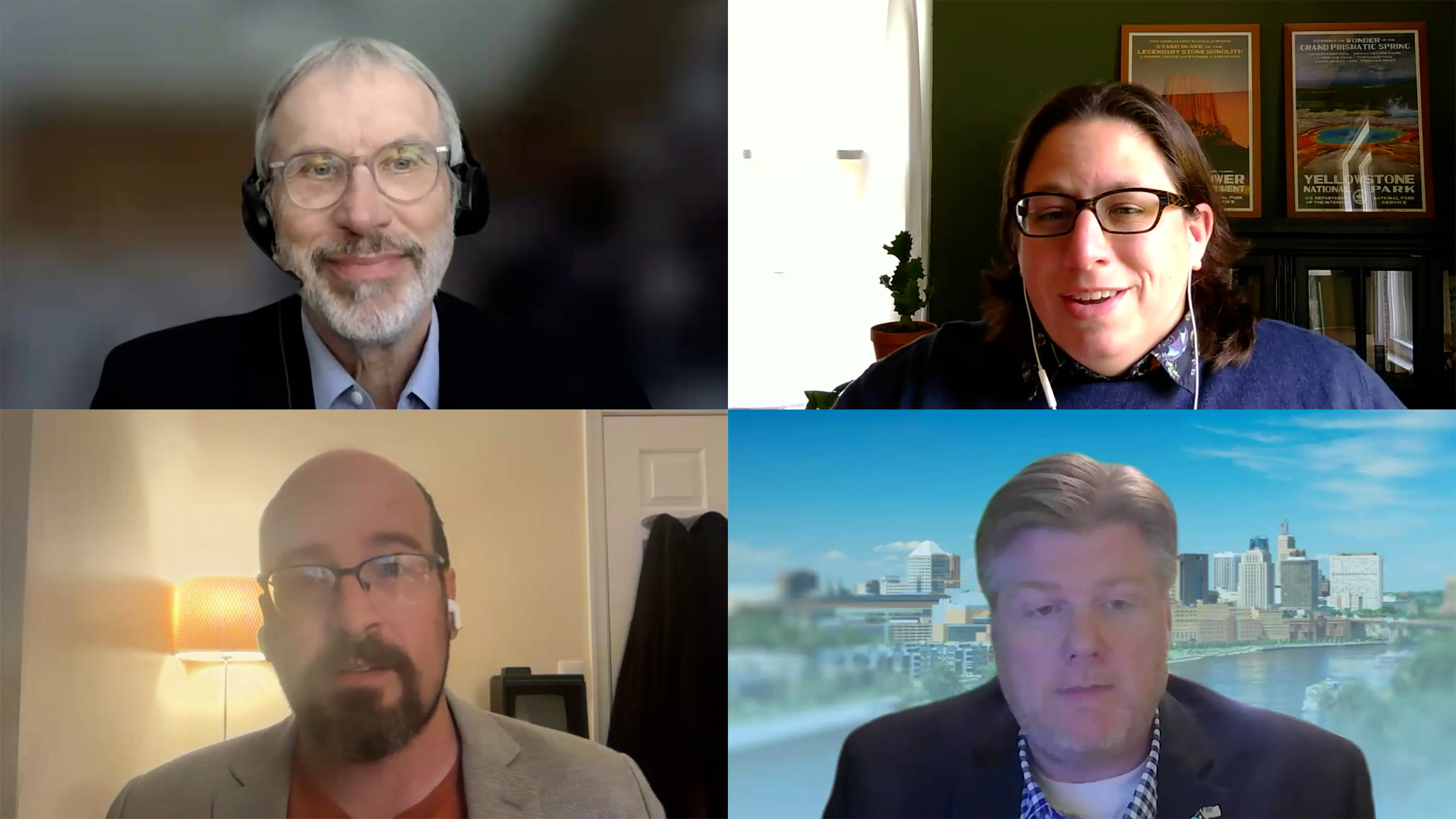
This May, the Federal Reserve Bank of Minneapolis hosted a virtual event, How Can Public Policy Boost Hiring?, to explore policy options for strengthening hiring when employers are reluctant to hire or when labor market conditions are poor. While some policies target resources that support workers—such as transportation or child care—this event focused on strategies that encourage employers to hire. Researchers, policy experts, and practitioners discussed potential benefits of labor demand programs to workers, their families, and their communities, as well as trade-offs related to program costs and employer burdens. Speakers also shared policy examples and design considerations.
The conversation grew out of work by the Minneapolis Fed’s Community Development and Engagement team providing new research insights on policy responses to weak labor demand. Our studies focused on the short- and long-term impacts of federal public-hiring programs. This research supports our mission to advance the economic well-being of low- to moderate-income individuals, households, and communities, and contributes to the Federal Reserve’s mandate to pursue maximum employment.
The role of labor demand policies
If workers and jobs aren’t matching up, it could be for a variety of reasons, some having to do with worker barriers and others due to employer constraints. Labor demand policies target the employer side of the hiring equation, often with an emphasis on helping low-income individuals who face employment obstacles such as education and skill gaps get hired. “Employers may not hire if they don’t understand workers’ qualifications, or when economic conditions are poor,” said Hue Nguyen, Minneapolis Fed Assistant Vice President for Policy and Community Affairs Officer.
When labor demand policies achieve their intended purpose of helping people land jobs, they can have a variety of positive effects. “When you get someone into a job, not only do you help that person both short-term and long-term, but it has impacts on their family, their kids’ upbringing, the outcomes for the kids, as well as neighbors,” said Timothy Bartik, senior economist with the Upjohn Institute. “If someone’s employed in the neighborhood, some of the other kids growing up in that neighborhood are better off because more people in the neighborhood have jobs. Presumably there are job-networking effects, role model effects, and other positive spillovers.”
Speakers discussed two major areas of labor demand policies: wage subsidies and public-hiring programs. In the case of wage subsidies, the government shares the cost of employing workers by providing tax credits or direct payments to employers. Neal Young, director of economic analysis at the Minnesota Department of Employment and Economic Development (DEED), gave the example of the Minnesota Job Creation Fund, which provides eligible companies with financial incentives for creating or retaining high-paying jobs and meeting capital investment targets. Information on projects supported under the program is available on DEED’s website. For example, the state awarded $175,000 to Ryder Integrated Logistics Inc. in Shakopee, Minnesota, for creating 32 jobs and making a $1.26 million capital investment.
Public-hiring programs, in contrast, provide jobs through direct government employment to qualifying workers. One example is the Works Progress Administration (WPA), a federal program that created employment opportunities during the Great Depression. From 1935 to 1943, the WPA hired more than 8.5 million Americans to complete thousands of public-works, arts, and cultural projects.
In addition to programs supporting eligible workers regardless of where they live, there are place-based approaches that target distressed geographies. For example, enterprise zones designate an area for economic development incentives such as tax credits. An enterprise zone might provide wage-subsidy benefits to employers that create jobs in that area.
Designing policies for maximum impact
Each type of policy can have its pluses and minuses. “Our research at the Minneapolis Fed highlights that there are key trade-offs when designing and implementing labor demand policies,” said Minneapolis Fed Economist Ayushi Narayan as she presented findings at the May event.
For example, Narayan’s research exploring the role of wages on WPA worker outcomes yielded mixed results. Paying higher wages to WPA workers was associated with higher educational attainment of teen boys living in their family households, potentially because those teens faced lower pressure to earn income for their families. At the same time, higher wages did not appear to reduce overall unemployment, possibly because the program could have attracted workers away from the private sector in some cases rather than providing jobs to those currently unemployed.
Narayan’s research similarly identified trade-offs in decennial census hiring, examining the labor market trajectories of nearly 1 million individuals hired to help with the 2010 Decennial Census. She compared two groups of applicants for the census positions: a group that had low scores on their application exam and were therefore eligible to be hired, and a group that had only slightly lower scores on their exam but were not eligible to be hired. Narayan found that while the two groups had similar wage rates over time, those who were deemed eligible and then actually hired were more likely to be employed somewhere until 2023, the final year of the analysis. On average, this increased likelihood of employment translated into nearly $6,000 more in W-2 wages every year after 2010, yielding greater spending power for these individuals and additional tax revenue for the government. At the same time, hiring these workers may have come with higher costs. The findings showed that “individuals with lower test scores in the data were more likely to be terminated for performance-related reasons, as an example,” Narayan said.
Given the potential trade-offs, speakers at the May event discussed considerations policymakers should bear in mind when designing labor demand policies. “We need to figure out how to maximize not just the short-run effects, but how to increase the rollover into permanent private jobs and increase the community spillover benefits,” Bartik said.
Directing benefits to specific worker populations
One design consideration panelists raised was the extent to which wage subsidies and public-hiring programs target specific worker populations. Young illustrated the potential merits of this type of targeting with a historical example. Established during an economic downturn in the early 1980s, the Minnesota Emergency Employment Development program provided employers with a wage subsidy for hiring and retaining unemployed workers who did not have access to unemployment insurance benefits either because they had exhausted their benefits or were not eligible initially. Evaluation results credited the program with cost-effective creation of jobs that many workers stayed in even after the wage subsidy ended.
“It was targeted toward people who really were more in need of assistance to get back into the job market, and it was temporary in terms of the assistance provided,” Young said. “There were generally some pretty good results.”
Speakers cautioned that directing benefits to those who most need them, versus offering them in a more blanket manner, may increase program-administration costs. For example, employers may need to complete paperwork documenting that benefits are going to the intended recipients.
“You need something that doesn’t require a lot of micromanagement,” said Adam Ozimek, chief economist with the Economic Innovation Group. “Often, the more work that you’re making employers do, you’re sort of counterfactually proving that they were going to provide this type of worker support anyway. If it’s worth it to them to do all the paperwork in order to get some sort of subsidy to hire people, they were probably going to hire people anyway. You have these potential trade-offs in program-administration costs to consider.”
Connecting workers to a fair wage and the right fit
Not all jobs are created equal, and speakers discussed the importance of ensuring that labor demand policies connect workers to good jobs—those providing family-supporting wages and benefits.
According to Young, employer reporting requirements can help ensure that jobs created by labor demand policies meet certain criteria. He noted that under Minnesota law, employers that receive business subsidies from state and local agencies, including subsidies that consist of support from labor demand programs, must meet specific and measurable goals and report on them to DEED. “Having metrics and tracking those metrics has been really critical to making sure that businesses meet program objectives,” he said.
Bartik added that part of what makes wages fair is that they factor in the requisite level of job training. “I think state and local governments or the federal government should target jobs that pay higher wages, but I would emphasize a higher wage premium relative to the educational credentials required,” he said. “I would urge states to adopt that as a criterion rather than simply looking at wages by themselves.”
No matter what the wages or benefits, a job may not be “good” if the employee can’t succeed in it. According to Jen Swalboski, Minnesota Family Investment Program director at Hired, finding the right fit can mean combining education and training with support for personal challenges that affect work. “We need to pair our workforce development programming with supports that focus on transportation, child care, affordable and safe housing, community resources that may address the job seeker’s or somebody else in the family’s health, food scarcity, domestic violence, and other pieces like that.”
One way to help a prospective employee succeed is to give them a taste of a job before they start. For example, Hired’s Drive for 5 Workforce Initiative offers job exposure and training at manufacturing businesses through a partnership with DEED. The program targets industries expected to have major shortfalls in the next decade. “Participants go onsite to one of these employers, and they’re actually able to suit up in exactly what you have to wear. They’re there for the whole day and get experience in that field,” Swalboski said. “If they’re interested in the job, the employers will pay their wages and Hired provides funding to train them. This helps them upskill to a higher-level job that has a more family-sustaining wage.”
Hired has also partnered in paid work-experience programs to help individuals get their foot in the door. One past program, the Minnesota Subsidized and Transitional Employment Demonstration program, placed individuals who are on public assistance in subsidized internships. “Programs like this provide an opportunity to get used to environments that they’re not used to already,” Swalboski said.
Targeting distressed places
For some labor demand programs, location is everything. Speakers discussed considerations for policies designed to boost hiring in economically depressed geographic areas. Ozimek sees benefits of these initiatives when they’re designed well: “For example, downtown urban revitalization efforts can help create new labor demand, bring high-skilled people into distressed places, supply human capital to help new start-ups, support new entrepreneurship, and play a role in undoing the out-migration of skilled people,” he said.
Some programs target the specific skills needed by businesses in an area. One way of doing this is by providing prospective workers with customized job training, which can equip them to address specific business needs. “A lot of states are doing this—trying to provide customized job training and also providing infrastructure and site assistance through industrial parks, research parks, business parks, and business incubators,” Bartik said. “And there are business advice programs like manufacturing-extension programs that help businesses figure out how to adopt new technologies and find new markets.”
Effectively designing place-based policies requires understanding local labor markets. “If the employment rate in an area is already really high, creating new jobs largely just leads to bringing in a new population,” Bartik said. “The overall employment rate doesn’t go up. It doesn’t raise earnings per capita that much in those situations.”
Swalboski pointed out that community organizations can help tailor programs to local conditions. “There’s a place for community organizations—the local counties, cities, everybody working together to really understand why folks aren’t involved in the local market or why employers in that area aren’t hiring. And there’s a place for lifting up the voices of the people living in economically depressed areas so that we can actually do that targeted place-based programming,” she said.
Considerations around employer burden also apply to these programs. Young spoke to the importance of finding ways to deliver geographically targeted wage or hiring benefits that aren’t difficult for program administrators and employers. He described lessons learned from a past place-based program in Minnesota, the Job Opportunity Building Zone (JOBZ) program, which provided businesses in certain areas with a job-creation tax credit. According to Young, JOBZ was “difficult to administer” because the Minnesota Department of Revenue handled parts of the program and DEED handled other parts. The Job Creation Fund, established in 2013, streamlined the process of delivering program benefits to employers. The program is “pay-for-performance—or pay-as-you-go,” said Young, with DEED paying benefits directly to businesses once they’ve shown that they created the intended jobs.
Flexing with the economic cycle
Beyond the “who,” “what,” and “where” of labor demand policies, speakers also raised the “when” as a design consideration. “Labor demand programs have far greater effects when they’re implemented at times—or in places—with low labor demand, such as during recessions,” Bartik said.
Young raised the importance of mechanisms that enable labor demand programs to flex with the economy. “There’s a legacy of programs that are created during one part of the economic cycle that then just kind of continue regardless of the economic cycle,” he said. “There are times when labor-saving policies are more helpful, when labor markets are really tight, and there are times when labor-using policies are more helpful, when labor markets need additional demand. It’s a matter of trying to figure out some mechanism that can move with the labor cycle.”
To Ozimek, wage subsidies offer an approach that can fluctuate with economic conditions. “In the event of a recession, a wage subsidy is something that can be turned up,” he said. “For example, you could have a federal policy that’s connected directly to low-wage workers’ paychecks every week. You know exactly who it’s going to, and you can just turn this up in the event of a recession.”
Labor market changes raise new policy considerations
A changing labor market raises new questions for designing labor demand policies. Speakers discussed how artificial intelligence and other new technologies could affect the types of support needed to match workers to jobs.
Swalboski pointed out that job-training programs will need to change with the technology, and that her organization is taking steps in that direction. “We’re trying to address the digital skills gap so the folks we work with can have more success in their jobs. That’s something we’re building into our programming. We’re focusing on emerging questions like, How can you use AI? How are expectations for AI skills impacting your job search?”
AI also poses broader questions about worker displacement and long-term labor market impacts. To Bartik, AI’s potential impact on the workforce just means that policymakers may need to identify new ways to help match workers to employment. “If there’s an issue with AI in the labor market, we need to watch what happens as it develops, and we need to see if we can help shape AI so that it hopefully augments workers’ productivity rather than substituting for it.”
Quotes have been edited with speakers’ permission.
More On