- Event video(video)
The Survey of Native Nations represents a transformative approach to advancing the quality and availability of tribal financial data to inform tribal decision-making. Working with the Center for Indian Country Development (CICD), tribes that have completed the survey are enhancing their ability to analyze their financial data and communicate their economic contributions in data-informed ways. Built on Indigenous research principles of tribal data sovereignty and reciprocity, the Survey of Native Nations leverages the Federal Reserve System’s secure data infrastructure to protect and steward tribal data.
This webinar provided tribal leaders, tribal finance practitioners, tribal government services staff, and Native organization leaders with the opportunity to learn how tribes are leveraging this unique data collaboration to advance their data practices. CICD staff discussed the survey’s flexible design, provided an overview of data-security procedures, and shared examples of the data analyses that participating tribes receive. Tribal leaders shared their perspectives on how Native nations can use survey results to advance their individual economic development goals.
Those interested in exploring their tribe’s potential participation in the survey learned how to connect with project leadership or request a briefing for their tribal government.
Speakers included:
- First Assistant Chief Wayne Adkins (Chickahominy Indian Tribe), Chickahominy Indian Tribe
- Phil Gover (Northern and Southern Paiute, Pawnee, and Comanche Nations), CICD, Federal Reserve Bank of Minneapolis
- Casey Lozar (Confederated Salish and Kootenai Tribes), CICD, Federal Reserve Bank of Minneapolis
- H Trostle (Cherokee Nation), CICD, Federal Reserve Bank of Minneapolis
- Vice Chair Crystal Williams (Coushatta Tribe of Louisiana), Coushatta Tribe of Louisiana
Event Details
Event Agenda
Tuesday, March 3, 2026 |
|
| 1:00 p.m. – 1:10 p.m. CT |
Welcome and Introduction to the Survey of Native NationsSpeaker: Casey Lozar (Confederated Salish and Kootenai Tribes), CICD, Federal Reserve Bank of Minneapolis |
| 1:10 p.m. – 1:30 p.m. CT |
Survey OverviewSpeaker: Phil Gover (Northern and Southern Paiute, Pawnee, and Comanche Nations), CICD, Federal Reserve Bank of Minneapolis |
| 1:30 p.m. – 1:45 p.m. CT |
A Data-Driven Future: Survey of Native NationsModerator: H Trostle (Cherokee Nation), CICD, Federal Reserve Bank of Minneapolis
|
| 1:45 p.m. – 1:58 p.m. CT |
Audience Q&AModerator: H Trostle (Cherokee Nation), CICD, Federal Reserve Bank of Minneapolis |
| 1:58 p.m. – 2:00 p.m. CT |
Closing Remarks and Thank YouSpeaker: Phil Gover (Northern and Southern Paiute, Pawnee, and Comanche Nations), CICD, Federal Reserve Bank of Minneapolis |
Additional Resources
Presenter Information
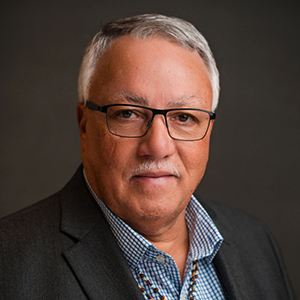
First Assistant Chief Wayne Adkins
Chickahominy Indian Tribe
Chickahominy Indian Tribe
Wayne Adkins has been an active citizen of the Chickahominy Indian Tribe since he became eligible for enrollment as an adult. He has been a member of the Chickahominy Tribal Council since 1996 and has served as first assistant chief since June 2011, after serving as second assistant chief for 10 years. Adkins is also employed as the tribe’s finance officer, holding responsibility for accounting, purchasing, payroll, and property management.
He has served as president of Virginia Indian Tribal Alliance for Life (VITAL), which played a central role in working toward the federal recognition of six Virginia tribes in 2018.
After obtaining a Bachelor of Science in electrical engineering from the University of Virginia in 1976, Adkins worked in the electrical engineering profession for 32 years.
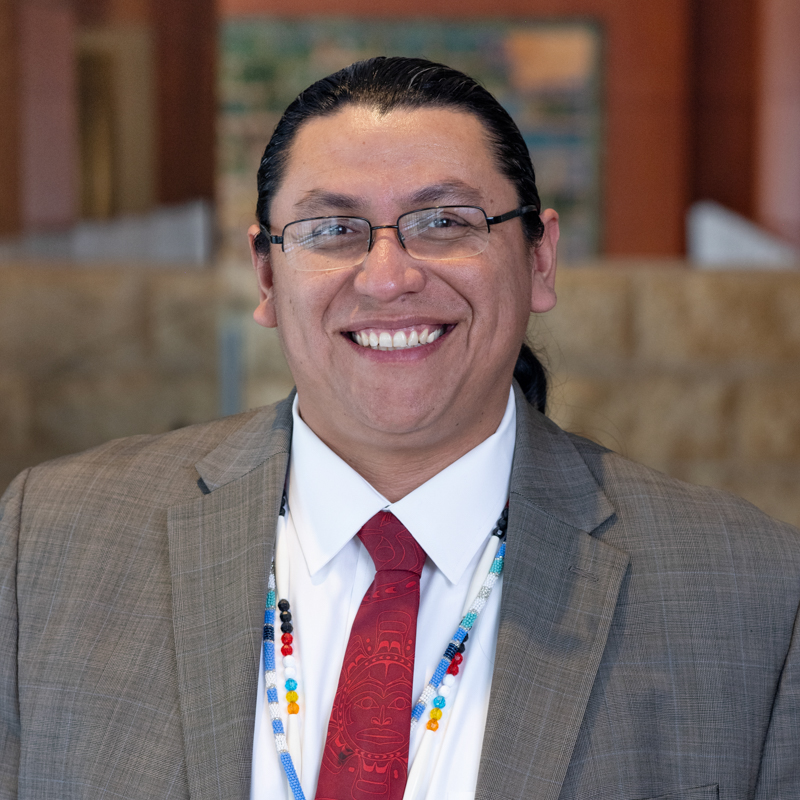
Phil Gover
Northern and Southern Paiute, Pawnee, and Comanche Nations
Senior Policy Analyst, CICD, Federal Reserve Bank of Minneapolis
Phil Gover is a senior policy analyst for the Minneapolis Fed’s Center for Indian Country Development, where he is a leader of the Survey of Native Nations and provides research and expertise on tribal government credit needs and community development finance opportunities in Indian Country, especially those related to the Community Reinvestment Act.
Gover has worked in and around Indian Country for more than 20 years, serving in a variety of project management capacities and spending more than a decade in the education sector. Gover is also chairman of the board of directors of Multiplier, a California-based nonprofit and social entrepreneurship incubator and accelerator.
Gover holds a B.A. in political and social thought from the University of Virginia and an MBA in strategy and operations from the University of Virginia’s Darden School of Business. He is an enrolled member of the Cedar Band of Utah Paiutes, grew up on the Hungry Valley Reservation at the Reno-Sparks Indian Colony, and descends from the Comanche and Pawnee Nations.
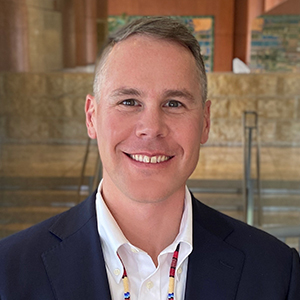
Casey Lozar
Confederated Salish and Kootenai Tribes
Vice President, Director of CICD, Federal Reserve Bank of Minneapolis
Casey Lozar is a vice president at the Federal Reserve Bank of Minneapolis and director of the Center for Indian Country Development (CICD), a research and policy institute that works to advance the economic self-determination and prosperity of Native nations and Indigenous communities.
Before assuming leadership of CICD, Lozar was assistant vice president/outreach executive in the Bank’s department of Public Affairs, and the leader of our Helena Branch.
Prior to joining the Minneapolis Fed in 2018, Lozar served in economic development and higher education roles for the State of Montana. Additionally, he held executive leadership positions in national Native American nonprofits, including the American Indian College Fund and the Notah Begay III Foundation.
Lozar received degrees from Dartmouth College and Harvard University and an MBA from the University of Colorado-Denver.
Lozar is the 2021 recipient of the Janet L. Yellen Award for Excellence in Community Development and a 2022 recipient of the Honorary Leadership Award from the Native American Finance Officers Association.
A Montana native, Lozar was raised on the Flathead Indian Reservation and is an enrolled member of the Confederated Salish and Kootenai Tribes.
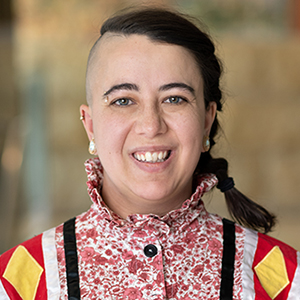
H Trostle
Cherokee Nation
Senior Policy Analyst, CICD, Federal Reserve Bank of Minneapolis
H Trostle (they/them) is a senior policy analyst for the Minneapolis Fed’s Center for Indian Country Development (CICD), where they are a leader of the Survey of Native Nations and work with tribes and regional Native organizations to provide research insights related to tribal public finance. Trostle’s areas of expertise include economic development and infrastructure on tribal lands. Prior to joining the Bank, they worked at the American Indian Policy Institute at Arizona State University and the Institute for Local Self-Reliance in Minneapolis.
Trostle studied Indigenous planning and holds a master’s degree in urban and environmental planning from Arizona State University. In 2025, they completed a graduate certificate in tribal sovereignty and federal Indian law at the University of Minnesota Duluth. Trostle also holds a bachelor's degree in political science and classical language from Macalester College.
Trostle is a citizen of the Cherokee Nation.
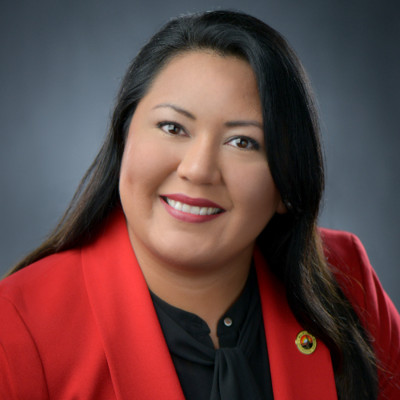
Vice Chair Crystal Williams
Coushatta Tribe of Louisiana
Coushatta Tribe of Louisiana
Crystal Williams has extensive experience serving tribal communities at local, regional, and national levels. She is currently in her third term on the Coushatta Tribal Council and serves as the vice chair.
In addition to serving her local tribal community, Williams is the treasurer for the United South and Eastern Tribes Executive Officers Committee and a national at-large primary delegate for the U.S. Department of Health and Human Services’ Tribal Advisory Committee. She is also active in the Tribal Economic Tax Reform Advocacy Alliance. Most recently, she was appointed to the Indigenous Fashion Collective as a board member.
Williams has a long history of working on behalf of tribal youth, elders, community, and culture. Her commitment to Koasati culture facilitated historic documentation of language and arts with William & Mary College’s Department of Linguistics. She enjoys volunteering in her community by serving on the Coushatta Powwow and Princess committees.
Williams received her bachelor’s in political science from McNeese State University.
Partners
Presented by the Center for Indian Country Development at the Federal Reserve Bank of Minneapolis, with the Affiliated Tribes of Northwest Indians, NAFOA, National Center for American Indian Enterprise Development, National Congress of American Indians, and United South and Eastern Tribes.