Author


Article Highlights
- Artificial intelligence raises new risks to tribal data but also new economic benefits
- Tribal leaders weigh implications for data governance, workforce development
- Economic data help tribes restore land, generate revenue, finance capital projects
As co-founder of First Languages AI Reality (FLAIR), Michael Running Wolf (Lakota, Cheyenne) works on the cusp of technological innovation. FLAIR uses artificial intelligence to reclaim Indigenous languages through speech-recognition models that help communities preserve and pass on their linguistic traditions. His work is cutting edge, but Running Wolf draws from the past to characterize today’s digital transition.
“We’re in a moment now where it’s like 1998, and the Internet’s about to be big,” Running Wolf said at Sovereignty in Numbers: The 2026 Center for Indian Country Development Data Summit on June 25. “We can invest ourselves in AI, or we can let AI bypass Indian Country and not participate in the new economy. We have an opportunity here to be early.”
Tribal leaders speaking at the event explored how tribes are establishing the data governance systems needed to guide a variety of economic decision-making in a world of rapidly changing technology. They described using economic data to restore land, diversify tribal revenue streams, and finance capital projects. Across topics, they characterized the stewardship of tribal data as a sovereign obligation.
Every year, CICD hosts an economic data summit as part of our mission to advance the economic self-determination and prosperity of Native nations and Indigenous communities through actionable data and research that inform public policy discussions. This year, more than any other, conversations carried a sense of immediacy in their reflection of a rapidly changing context.
Building sovereign digital ecosystems
CICD Director Casey Lozar (Confederated Salish and Kootenai Tribes) and Research Professor and American Indian Policy Institute (AIPI) Executive Director Traci Morris (Chickasaw Nation) kicked off the event with a fireside chat about an emerging topic for tribal and other forms of government: digital sovereignty. Morris, who is a scholar in this space, defined tribal digital sovereignty as “the exercise of self-determination and governance over a tribal nation’s digital presence.” The term encompasses everything from a tribe’s airwaves and broadband infrastructure to how the tribe collects, stores, uses, and shares its tribal data.
One way to think about a tribe’s data infrastructure is as digital land, Morris said. “Getting tribal data sovereignty right is as important as protecting the land. It’s the digital age, and data is our territory. It carries our people, our languages, our future generations.”
Tribes grappling with the nuts and bolts of building out a modern digital governance framework have resources to guide their decision-making. For example, the AIPI published a guidebook that lays out five leading values, starting with viewing data as kin, a concept that Morris credited to Chickasaw Nation Data Stewardship Director Mari Hulbutta (Chickasaw Nation). “Talking about data as kin changes the way we think about data governance from a matter of compliance to a matter of duty,” Morris said.
She also directed event participants to a framework published by University of Tulsa President Stacy Leeds (Cherokee Nation) and colleagues in The Journal of Community Informatics that identifies four buckets of essential legal infrastructure for tribes to address as they develop their digital policies: tribal codes and regulations, contracts and agreements, easements and infrastructure arrangements, and business-registration systems.
“Don’t leave digital governance values and guidelines up to a leader’s priorities, because our leadership changes,” Morris said. “We’ve got to translate community values into ordinances, contracts, and land use agreements and take care that those digital governance tenets survive transition.” Speaking about tribal codes and regulations, she illustrated how tribes can break down the process: “Start with civil and regulatory authority over health and financial data, because that’s the easiest data to defend and the most misused, so it’ll have high impact.”
Putting the people in place to power digital governance
Even in an era of new automation, data governance requires an enduring resource: people.
“We need to build roles inside tribal government to guide and implement digital policies,” Morris said. “We need data governance officers, cybersecurity specialists, AI ethics reviewers, and digital-rights advocates. And we need to ground those positions in tribal law and culture.”
According to multiple speakers at the data summit, even people at the highest levels of tribal government need a basic understanding of the risks and benefits that emerging technologies pose to tribal citizens. In a panel discussion on AI considerations in Indian Country, Eric Ramos (Blue Lake Rancheria Tribe), senior vice president of Tribal First, said it’s incumbent on tribal leaders to understand the implications of their tribes’ data decisions. “There’s a tremendous amount of savings and efficiency that can come with adopting AI in tribal operations, but the biggest risk is, does tribal leadership understand what that software is doing?”
Ramos illustrated his point with a seemingly innocuous data task: a tribal gaming operation determining whether to renew the software license for its customer relationship management database. On the surface, that may seem like a technical decision outside the purview of tribal policymakers—something more befitting of an IT director or the casino’s general manager. But what if that database holds identifiable tribal citizen data such as driver’s license numbers, W-2 information, or Social Security Numbers? And what if, buried in the fine print of the software upgrade, there are changes to the vendor’s ability to access that information?
“Now you might have an agentic AI system (that is, one requiring minimal human oversight) that has access to all that data,” Ramos said.
He encouraged tribal leaders to dig in and understand the evolving digital landscape. “There are decisions implicating tribal data that we don’t think about that should be presented to the tribal council.”
Navigating AI’s opportunities and risks
Tribes aren’t alone in navigating rapidly changing technology, particularly AI. Morris estimated that more than 36 states have pending legislation related to AI governance. “We’re not behind the eight ball. Everybody’s in the same boat right now—cities, towns, counties, nations, the world. We’re all trying to figure out how to govern AI and this digital space, and other governments can learn from what tribes do.”
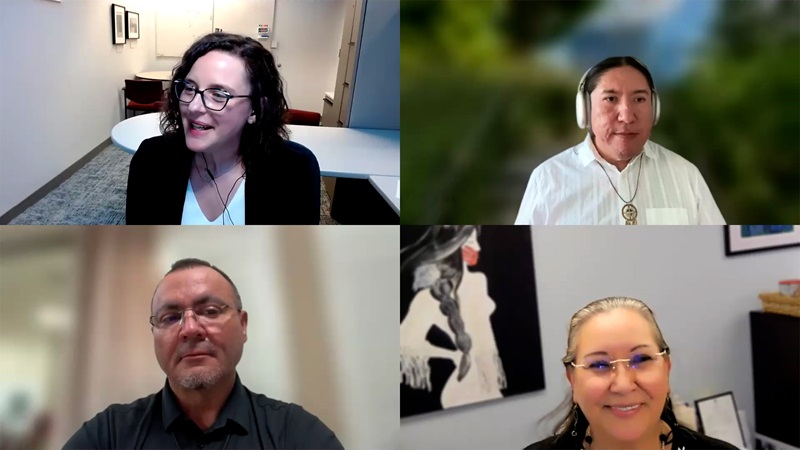
Data summit speakers addressed both the unprecedented risks and benefits that AI poses to tribal and other governments. AI can help businesses automate tasks that previously required significant resources, and it can enable entrepreneurs to perform business functions outside their areas of expertise. At the same time, AI not only raises new risks to data but poses potentially significant workforce implications. Tribes are also weighing decisions about locating AI data centers—facilities that house data-storage and computational infrastructure—on tribal lands, and considering the associated impact on tribal citizens and the environment now and in future generations.
Speaking to the potential advantages, Lac Courte Oreilles Band of Lake Superior Ojibwe Secretary/Treasurer Michelle Beaudin (Lac Courte Oreilles Band of Lake Superior Ojibwe) noted that at a time when tribes are working to advance their economic data infrastructure, AI can augment their capacity to analyze tribal data. For example, tribes send their data to government agencies that allocate funding and philanthropies that award grants. But according to Secretary/Treasurer Beaudin, the way those entities analyze the data and make funding decisions may not be clear to tribes. “Instead of external agencies dictating to us what our economic need is based on their analyses of our data, AI can help us tell them what our need is individually as tribes,” she said.
Running Wolf, Ramos, and Secretary/Treasurer Beaudin advised that as tribes weigh the benefits and risks of AI applications, they carefully consider potential workforce implications for present and future generations. “Tribes will need to be very intentional about workforce development,” Running Wolf said.
He gave the example of a tribe deploying AI to automate entry-level tasks in the finance department. In the short term, eliminating junior positions could save the tribe money. “Your inclination is to get rid of all your junior staff and only keep your senior staff, but now you’ve lost your talent pathways. You no longer have junior financial staff learning the ropes, learning the intricacies of the tribe and its financial governance structures,” he said. “You’re going to face a talent cliff when senior staff depart.”
The Lac Courte Oreilles Band of Lake Superior Chippewa has engaged its tribal university to help navigate these issues. “We’ve tasked our university with looking at these new technologies that are coming out, looking at our workforce, and identifying our future workforce needs,” Secretary/Treasurer Beaudin said.
When it comes to weighing the potential long-term impacts of today’s AI decisions, speakers observed that tribes have the benefit of intergenerational thinking. As Secretary/Treasurer Beaudin put it, “When we make decisions, we’re looking at how those decisions honor the past and impact our future generations, whether it’s their environment, where the workforce is going, or the needs of those future communities. We take a holistic approach.”
Reclaiming tribal lands
This regard for past, present, and future wove through an event whose topics, while focused on economic data, spanned several areas of tribal decision-making. Take, for example, tribal decisions about land. Tribes draw on a variety of data to support their efforts to reclaim land that was lost through treaties and federal policies.
In northeastern Minnesota, the Fond du Lac Band of Lake Superior Chippewa works to reclaim tribal land by consolidating land held in trust by the federal government and acquiring fee land (land owned by individuals without the federal government’s oversight) through purchases from individuals selling their parcels or from counties that obtained land via tax forfeiture. As the tribe’s land information manager, Emilia Holstine has developed a comprehensive database containing as much information as can be gathered about parcels the tribe owns. The data can include anything from the history of land ownership to the parcel’s size and wetland status.
The tribe relies on GPS satellites to pinpoint geographic boundaries and GIS (geographic information system) software to map and analyze geographic data. “There’s a lot of different information that can be helpful when you’re trying to consolidate land or purchase fee land,” Holstine said. “One of the first things the land department did was go out and get accurate GPS points of all the legal boundary markers, which has proven to be extremely helpful in getting a sense of how much land is actually involved in a decision and what resources are present on a given parcel. A lot of the older information, especially in the more difficult-to-access areas, may be hundreds of feet off from where the actual marker in the ground is. By getting those accurate data points, we’ve been able to say, ‘No, actually, that is our parcel. You can’t go logging there.’”
Howard D. Valandra (Rosebud Sioux Tribe), president of the Indian Land Tenure Foundation, emphasized the value of economic impact data to tribal land-reclamation efforts. “Impact data can, for example, show that if tribes buy land and put it in trust, and it gets housing on there, the school district benefits immensely. If you do an analysis between the taxes that are imposed on land acquired by tribes vs. the impact data, the impact data will win every analysis.”
To document trends in tribal land ownership, CICD is developing the Tribal Indian Land Tracker, a tool that aims to quantify the growth in land owned by tribes and tribal enterprises. CICD Senior Economist Matthew Gregg shared initial data from the 11 federally recognized tribes in Minnesota. Since 2014, all 11 tribes have increased their land base, with a large share of that growth due to the purchase of taxable land. Despite this growth, tribes in Minnesota varied widely in the status of their land-recovery processes, owning a range of 5 percent to almost 100 percent of their reservation lands as of 2023. CICD plans to expand the database nationwide to provide a tool for understanding land-recovery efforts across the country.
Diversifying tribal revenue streams
Other panels at the data summit explored how tribes are working with economic data to make decisions about tribal revenue streams and attract capital to finance community projects. For example, data help tribes weigh the economic costs and benefits of potential new taxes. In the pilot of CICD’s Survey of Native Nations, we found that for tribal governments participating in the survey, taxes represented a smaller share of revenue than they did for state and local governments across the country, likely in part reflecting differences in taxation authority. “There’s a great need for increased tribal taxation revenues, whether that’s through new revenue schemes or new regulatory authority,” said Secretary Zechariah Harjo (Muscogee, Navajo, Chickasaw, and Seminole nations) of the Muscogee (Creek) Nation.
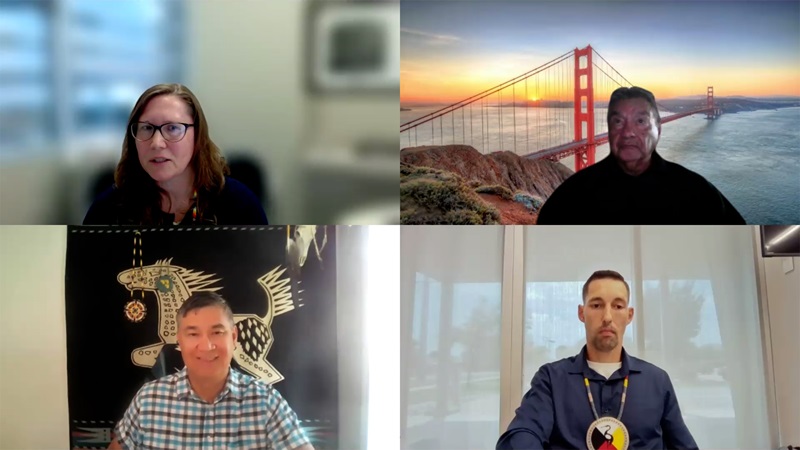
On swaths of its large land base in Oklahoma, the Muscogee Nation is the primary provider of health care, road maintenance, and other services, according to Secretary Harjo. Data help the Muscogee Nation communicate with municipal and state governments about the tribal impact of different taxation scenarios. For example, the tribe negotiated a Tax Increment Financing district with the City of Tulsa to share in tax revenue generated in a designated geographic area. “Revenue generated via sales tax, property tax, whatever other tax you might have generated within this property goes back to the tribe for developing it for a period of not less than 15 years and not more than 25,” Secretary Harjo said.
Data also help tribal leaders gauge their citizens’ perspectives on taxation decisions. When Danielle DeLong (Ho-Chunk Nation) served as vice president of the Ho-Chunk Nation, the tribal legislature considered a tax on junk food to support the tribe’s health and wellness efforts. “We’ve seen other tribal nations that also deal with high diabetes and childhood obesity rates try this tax. It ended up benefiting their communities, so we tried it. However, our tribal members didn’t feel that it was a fair taxation,” former Vice President DeLong said. “As legislators, we need to be representatives of our tribal people and follow our core values, so we did not push that tax forward … based on data and feedback from our tribal members.”
Weaving capital to finance tribal futures
Beyond tribal revenue streams, tribes work with economic data to secure financing for community projects. Jennifer Chadwick (Choctaw Nation of Oklahoma), community development advisor with the Federal Reserve Bank of Kansas City, moderated a discussion on the role data play in capital weaving. “A capital weave refers to the mixture of funding sources such as grants, loans, tax credits, equity, or philanthropic dollars that are layered together to finance projects,” Chadwick said. “Native communities braid and align diverse funding sources in a way that honors tribal sovereignty and meets community needs while navigating differing program rules and timelines.”
In 2025, the concept helped the Pawnee Nation of Oklahoma establish a behavioral health center that not only met community needs but made sense economically. With support from an early grant, the tribe conducted community surveys and town hall meetings to learn what services tribal citizens who were dealing with addiction needed. The tribe also worked with the State of Oklahoma on a needs assessment that could help attract other forms of financing. “In the north-central part of Oklahoma, there weren’t any in-patient treatment beds at that time, and we found out that the state, when it came to substance abuse treatment, was about 3,000 beds short,” said Brian (Wabjejak) Kirk (Citizen Potawatomi Nation), former program manager for Pawnee Nation Behavioral Health. “So we justified that we would be the first state-certified facility in the north-central part of Oklahoma that would provide these services for almost five counties.”
As senior director of Indigenous futures for Mission Driven Finance, Ted Piccolo (Colville Confederated Tribes) sees capital projects from a lender’s perspective. Piccolo’s advice to tribal community developers seeking to finance their projects is to come prepared with data. “Bring your solid projections. What are the economics really like on this? What are the social impacts? What is this project going to cost?”
And if the capital weave has already started, Piccolo suggests bringing information on the other forms of capital identified. “Think of a woven basket and the patterns put into the basket. The more of that pattern that can be brought to bear when you come to us, the easier it is for us as lenders to see it.”
According to Mike Lettig (Navajo Nation), who is senior managing director and group head of Native American financial services at Huntington Bank and a member of the CICD Leadership Council, traditional financial institutions stand to learn from Indian Country’s capital weaving. Lettig credited Native Community Development Financial Institutions (CDFIs) with spearheading new ways of combining financial resources. “The financial community at large can find lessons in some of the things that CDFIs have done individually and collectively to bring capital to Indian Country,” he said. “The capital weave solution … brings capital together in a more meaningful way by collaborating across multiple funders. The strength of capital weaves also dispels the myth of risk in lending in Indian Country.”
Powering economic self-determination with sound data
Whether speaking of AI, tribal land, taxation, or community investment, speakers conveyed a sense that stewardship of tribal data in any given area contributes to a broader ecosystem of self-determined economic decision-making. “Our success in each of these policy areas is woven together—by our tribal values, by our sovereign decision-making, and by our access to high-quality data and governance of that data,” Lozar said.
Lakota Vogel (Cheyenne River Sioux Tribe), executive director of Four Bands Community Fund and a member of the Federal Reserve Bank of Minneapolis Board of Directors, agreed. “It’s going to take all of us, from the different vantage points we each bring, to continue building out the economic data we need and develop the systems and protections to safeguard our data for future generations,” she said. “When I think about this work, the images that come to mind are basket weaving or sweetgrass braiding. Weaving a basket or braiding sweetgrass takes time and care, and the power is in how it all comes together.”
Quotes have been edited with speakers’ permission.